
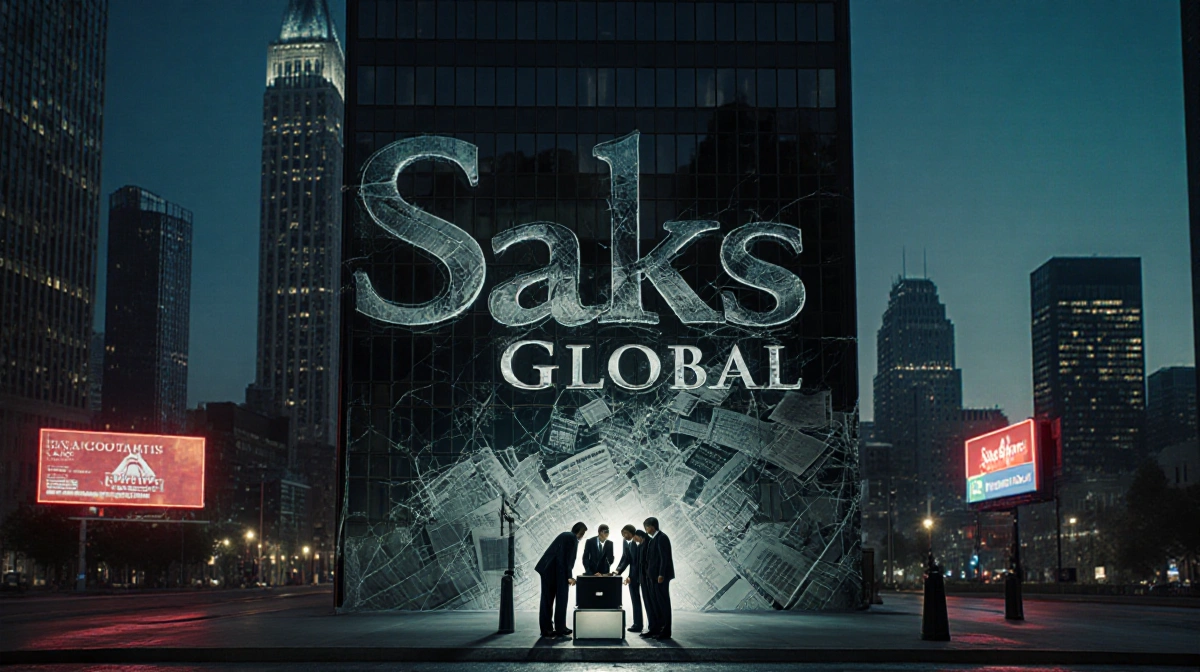

Luxury retail giant Saks Global has filed for Chapter 11 bankruptcy protection in the Southern District of Texas, announcing the move in a Wednesday release while touting $1.75 billion in fresh financing commitments.
At a Glance
- Saks Global, owner of Saks Fifth Avenue and Neiman Marcus, filed for Chapter 11 bankruptcy
- The company secured $1.5 billion from creditors plus another $240 million in incremental liquidity
- CEO Marc Metrick resigned earlier this month; Richard Baker briefly replaced him before Geoffroy van Raemdonck took over
- Operations, customer programs, supplier payments, and payroll will continue without disruption, the company says
- Why it matters: Shoppers and vendors want clarity on whether gift cards, loyalty perks, and deliveries will stay intact during the restructuring
The New York-based private company, which owns both Saks Fifth Avenue and Neiman Marcus, says the filing is part of a strategic pivot aimed at trimming the $2.65 billion debt pile it absorbed when it bought Neiman Marcus in 2024.
Executive Shakeup
Leadership turnover has accelerated in recent weeks:
- Marc Metrick stepped down as CEO earlier this month
- Richard Baker, then executive chairman, succeeded Metrick before resigning from both roles earlier this week
- Geoffroy van Raemdonck has now been named chief executive

The revolving door at the top mirrors wider pressure on the company to steady operations while confronting mounting competition and softer demand for ultra-high-end merchandise.
Debt Load vs. Market Headwinds
Saks Global is wrestling with two converging forces:
- Heavy leverage from the $2.65 billion Neiman Marcus takeover
- Customers pushing back against steep price increases on luxury goods
A November study by Bain & Co. projects that global luxury sales will shrink for a second straight year in 2026 as economic jitters curb discretionary spending. That macro backdrop leaves little room for missteps in merchandising or cost control.
Financing Package Breakdown
| Source | Amount | Purpose |
|---|---|---|
| Existing creditors | $1.5 billion | Debtor-in-possession financing |
| Lenders | $240 million | Incremental liquidity cushion |
| Total | $1.74 billion | Operational runway during Chapter 11 |
The company emphasized that the new money ensures it can:
- Keep stores and e-commerce sites open
- Honor customer loyalty programs and gift cards
- Pay suppliers on agreed terms
| Maintain payroll and benefits for employees
Strategic Review Underway
Saks Global says it is “evaluating its operational footprint to invest resources where it has the greatest long-term potential.” The statement hints at possible store closures, banner consolidation, or geographic rebalancing, though no specific locations or timetables were disclosed.
Corporate Timeline
| Year | Milestone |
|---|---|
| 2021 | Hudson’s Bay Co. spins off Saks.com e-commerce arm |
| 2024 | Saks Fifth Avenue acquires Neiman Marcus for $2.65 billion, renames parent entity Saks Global |
| March 2025 | Hudson’s Bay begins liquidating all but six Canadian stores |
| Present | Saks Global files Chapter 11, secures $1.75 billion financing |
Market Context
The bankruptcy caps a tumultuous period for North American luxury retail. Parent company Hudson’s Bay Co., Canada’s oldest corporation, started winding down the vast majority of its namesake stores in March 2025, further shrinking the physical footprint allied with the Saks banner.
Consumers have also recalibrated spending patterns. After pandemic-era splurges, shoppers are gravitating toward experiences or lower-priced premium segments, leaving high-fixed-cost luxury retailers with thinning margins.
What Happens Next
Chapter 11 gives Saks Global breathing room to:
- Renegotiate leases and supplier contracts
| Trim under-performing locations
| Restructure the $2.65 billion acquisition debt
| Test market appetite for a reorganized mix of Saks Fifth Avenue and Neiman Marcus inventory
The company has not set a target exit date from bankruptcy, but the sizable financing package signals lenders’ willingness to support a turnaround rather than a break-up.
Key Takeaways
- No operational disruption is expected; shoppers can still redeem gift cards and loyalty points
- Suppliers and employees will continue to be paid under normal terms
- $1.75 billion in committed financing provides runway for restructuring
- Leadership has changed three times in one month, underscoring urgency behind the reset
- The filing reflects both deal-driven leverage and softening luxury demand, not immediate liquidity failure
Caleb R. Anderson reported; News Of Fort Worth published the original dispatch.