
At a Glance
- Researchers have identified Diplolaimelloides woaabi, a new nematode species living in Utah’s Great Salt Lake
- The roundworm joins brine shrimp and brine flies as one of the few animals known to survive the lake’s extreme salinity
- Genetic evidence hints a second unknown nematode may also inhabit the lake
- Why it matters: The find expands the list of life forms that tolerate extreme salt and could serve as a living barometer for the lake’s ecological health
Scientists long believed only brine shrimp and brine flies could endure the Great Salt Lake’s briny waters. That list has now grown by at least one species. A University of Utah-led team has formally described Diplolaimelloides woaabi, a nematode whose name incorporates the Indigenous word wo’aabi, meaning “worm.”
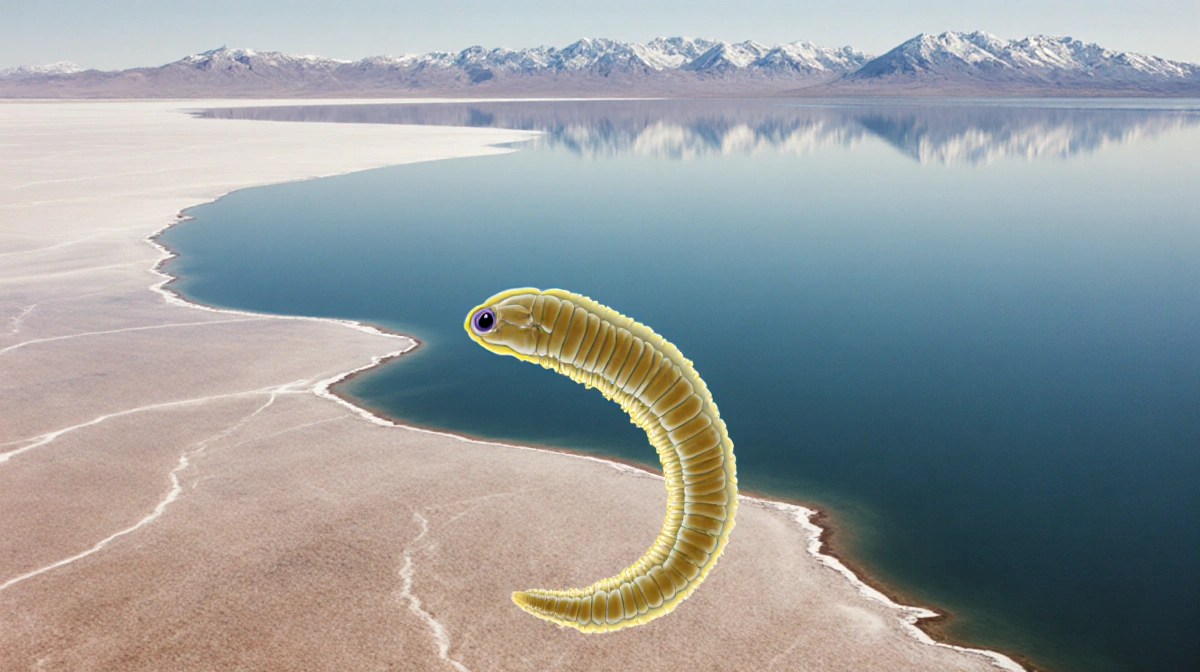
Nematodes account for roughly 80 percent of all animals in terrestrial soils and about 90 percent on the ocean floor. More than 250,000 species are known, and they thrive in habitats ranging from polar ice to deep-sea vents. Even so, until 2022 no one had confirmed their presence in the Great Salt Lake.
First Sighting in Microbialite Mounds
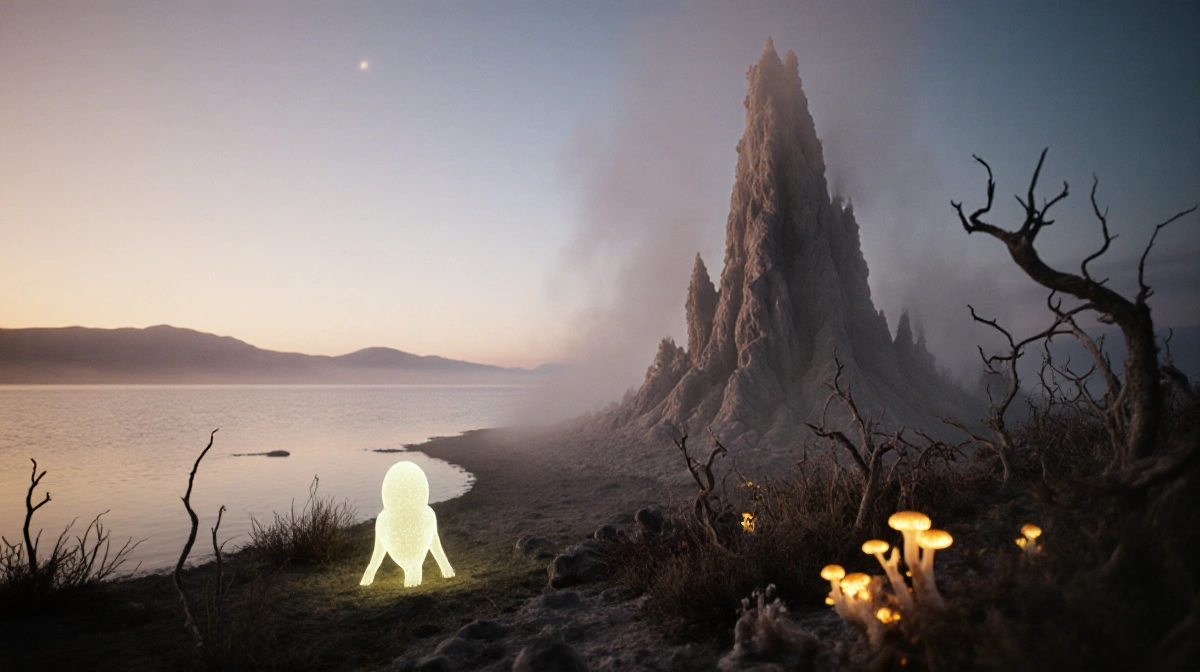
During fieldwork led by University of Utah biologist Julie Jung, researchers extracted nematodes from microbialites-living carbonate mounds built by microbes on the lake bottom. The discovery marked the first verified record of roundworms in the lake’s hyper-saline environment.
“We thought that this was probably a new species of nematode from the beginning, but it took three years of additional work to taxonomically confirm that suspicion,” Jung said in a university release. A study formally describing the species appeared last November.
Genetic bar-coding of the samples indicates yet another nematode lineage may also be present, though it has not yet been described.
Two Theories for an 800-Mile Enigma
The Great Salt Lake sits roughly 800 miles from the nearest coastline and 4,200 feet above sea level. How an ocean-tolerant nematode reached the basin puzzles researchers.
Lead author Michael Werner, a biology professor at the University of Utah, outlined two competing hypotheses:
- Ancient marooning: During the Cretaceous, much of present-day Utah lay along the shore of an inland seaway. Uplift of the Colorado Plateau could have stranded coastal organisms in what became the Great Salt Lake basin.
- Trans-continental hitchhiking: Nematodes from salt lakes in South America might have travelled north on migratory birds’ feathers or feet.
“Kind of hard to believe, but it seems like it has to be one of those two,” Werner said.
The ancient-resident idea faces a hurdle: northern Utah has swung between fresh and salty conditions several times over the past 100 million years. Any resident nematode would have needed to survive those dramatic shifts.
A Gender Imbalance in the Wild
Lab cultures of D. woaabi produce a balanced sex ratio-about 50 percent female, 50 percent male. Samples pulled directly from the lake, however, skew heavily female. Researchers have yet to identify what drives the disparity.
“There must be something separate going on in the lake compared to the lab,” Werner noted.
Worm as Environmental Sentinel
Because nematodes occupy key positions in food webs and respond quickly to environmental stress, scientists view them as bioindicators. Changes in their numbers or distribution can flag broader ecological shifts.
Co-author Byron Adams, a nematologist at Brigham Young University, emphasized the value of monitoring such a salt-tolerant species. “When you only have a handful of species that can persist in environments like that, and they’re really sensitive to change, those serve as really good sentinel taxa,” he said. “They tell you how healthy is your ecosystem.”
Key Takeaways
- The Great Salt Lake’s short species list has officially expanded to include Diplolaimelloides woaabi, a newly identified nematode
- Genetic data suggest at least one additional undescribed roundworm may share the lake
- Researchers debate whether the worms arrived millions of years ago via ancient seas or more recently via migratory birds
- Population quirks-such as a female-biased sex ratio in the wild-hint at environmental pressures not yet understood
- Because nematodes react quickly to habitat change, tracking D. woaabi could help managers gauge the lake’s ecological stability amid ongoing water diversions and climate stress