

At a Glance
- Viruses that infect bacteria aboard the International Space Station evolve in unexpected ways
- These space-adapted mutations make some viruses better at tackling drug-resistant infections on Earth
- The findings reshape how scientists view microgravity’s role in microbial evolution
- Why it matters: Insights from orbiting viruses could accelerate new treatments for stubborn infections
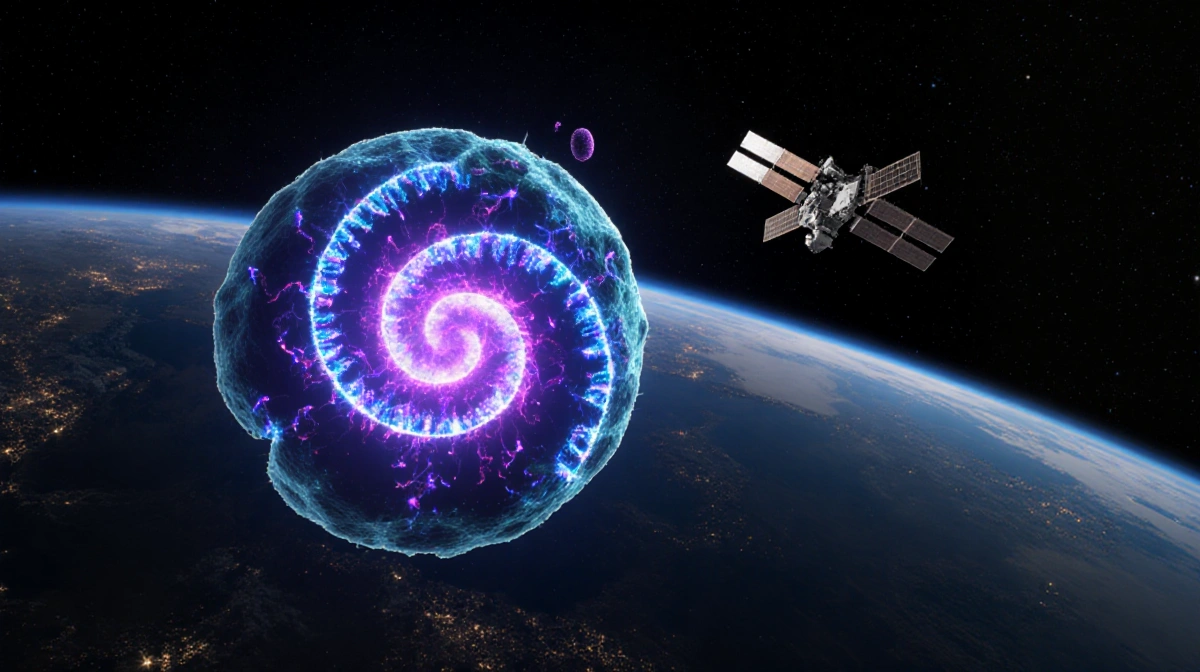
Viruses that prey on bacteria develop surprising new traits in orbit, according to research released Tuesday. A University of Wisconsin-Madison team compared bacteriophages-viruses that infect bacteria-grown aboard the International Space Station with identical strains raised on Earth. The space-based viruses took longer to infect Escherichia coli bacteria, yet both the viruses and bacteria mutated in ways never observed on the ground.
Slower Start, Faster Evolution
Microgravity changed the infection timeline. Fluids aboard the ISS do not mix as they do on Earth, so the viruses needed extra time to reach their bacterial targets. Once contact occurred, evolution accelerated.
Key differences observed:
- ISS viruses evolved to penetrate E. coli defenses more efficiently
- Bacteria developed enhanced resistance to viral attack
- Several viral gene changes had no Earth-based match
Senior author Vatsan Raman, a biomolecular and cellular engineer, told News Of Fort Worth that standard lab experiments miss these patterns because they assume Earth-like physics. “Spaceflight changes fundamental aspects of the environment-how fluids mix, how cells encounter one another, and how physical forces shape cellular physiology,” he said.
Unpredictable Gene Changes
The team focused on T7, a well-studied virus that targets E. coli. After weeks in orbit, viral genomes carried mutations in genes rarely activated on Earth. Some of these changes occurred in regions scientists have yet to fully map.
Raman emphasized the unpredictability: “We observed mutations appearing in unexpected genes, including ones that are poorly characterized in standard laboratory settings.”
| Trait Observed | ISS Samples | Earth Samples |
|---|---|---|
| Infection start | Delayed | Normal |
| New gene mutations | Multiple | None detected |
| Resistance to host defenses | Enhanced | Baseline |
Medical Payoff on the Ground
Laboratory tests back on Earth showed that several orbital mutations improved the virus’s ability to infect E. coli strains already resistant to conventional T7 attack. These resistant strains cause urinary tract infections in people, and the strengthened viruses could form the basis for future treatments.
Drug-resistant bacteria kill more than 1.2 million people worldwide each year, according to recent World Health Organization figures. Viruses that can pierce bacterial defenses offer an alternative to failing antibiotics.
Space as a Biology Lab
Raman hopes the work persuades researchers to treat space as more than a backdrop. “Think of space not just as a place to reproduce Earth experiments, but as a fundamentally different physical environment that can uncover new biology,” he said.
Future plans include:
- Mapping every mutation in the space-evolved T7 genome
- Testing how microgravity affects more complex microbial communities
- Identifying genes that can’t be altered easily in ground-based labs
The study appeared Tuesday in PLOS Biology.
Key Takeaways
- Space-based viruses and bacteria evolve along unique paths, producing mutations unseen on Earth.
- Some of these orbital mutations make viruses better at killing drug-resistant bacteria.
- Understanding microgravity-driven evolution can speed development of new infection-fighting tools.