
At a Glance
- Starfleet Academy is set in the late 32nd century, around 3190
- The galaxy is still recovering from a 120-year-old catastrophe called the Burn that shattered faster-than-light travel
- The Federation has collapsed from 350 worlds to fewer than 40
- Why it matters: This new series shows fans the most distant, war-scarred future the franchise has ever explored
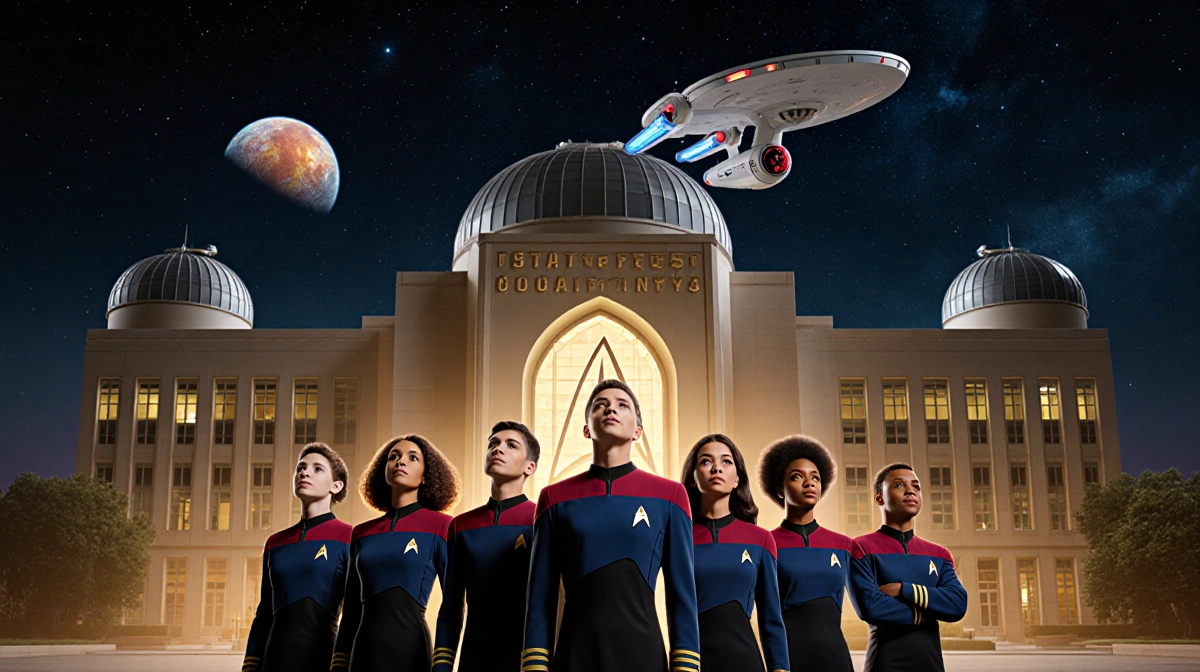
Starfleet Academy launches viewers into the late 32nd century, a time frame only briefly visited in Star Trek: Discovery‘s third and fourth seasons. Megan L. Whitfield reports that the show unfolds around the year 3190, after the cataclysmic event known as the Burn.
The Burn That Broke the Galaxy
Roughly 120 years before classes resume, all dilithium in the galaxy destabilized at once. Every active warp core detonated, killing billions and stranding civilizations. The Federation, once 350 worlds strong, shrank to fewer than 40 members as Earth, Betazed, Trill, Andoria, and Ni’var seceded.
- Federation headquarters relocated from Earth to the mobile station USS Federation
- Starfleet Academy closed its San Francisco campus until the era of Discovery‘s fourth season
- With travel times ballooning, criminal syndicates like the Orion-Andorian Emerald Chain and pirate bands such as the Venari Ral filled the power vacuum
Recovery began when Discovery uncovered a dilithium-rich planet in the Verubin Nebula, giving the Federation a lifeline and prompting the Academy’s reopening.
32nd-Century Tech Overhaul
Set almost a millennium after The Next Generation, the era showcases sweeping technological leaps:
- Handheld transporters permit near-instantaneous, pinpoint jumps
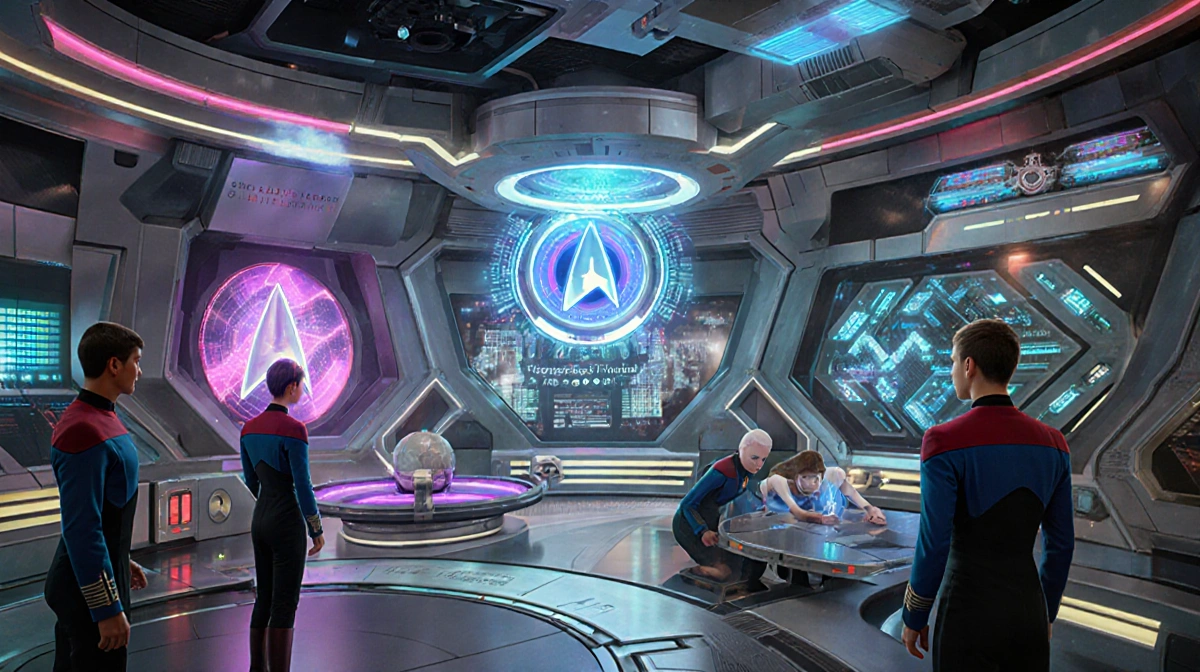
- Programmable matter-nanomolecule swarms-reshapes hulls, interiors, and even allows nacelles to float detached for better maneuverability
- The tricom badge replaces commbadges, personal transporters, and tricorders, projecting holographic interfaces on demand
- Physical tricorders still exist; Voyager‘s Emergency Medical Hologram, now a professor, uses both classic and holographic variants
Species Roster for the New Class
The revived Academy recruits cadets from across a fractured galaxy. Background scenes feature Orions, Ferengi, Kelpiens, Vulcans, Romulans, and Betazoids. Among the main cadets:
- Caleb Mir (Sandro Rosta) – human
- Darem Raymi (George Hawkins) – Khionian, outwardly human
- Genesis Lythe (Bella Shepard) – native of Dar-Sha
- Sam (Kerrice Brooks) – photonic life form from the Kasq collective
- Jay-Den Kraag (Karim Diané) – lone Klingon student
The faculty and staff also reflect hybrid heritage common in this era:
| Character | Actor | Heritage |
|---|---|---|
| Chancellor Nahla Ake | Holly Hunter | half-Lanthanite, a long-lived species introduced in Strange New Worlds |
| Lura Thok | Gina Yashere | half-Klingon, half-Jem’Hadar |
| Pirate Nus Braka | Paul Giamatti | half-Klingon, half-Tellarite |
The scarcity of full-blooded Klingons hints that the Klingon Empire suffered heavily after the Burn, paralleling the Federation’s decline.
Key Takeaways
- Starfleet Academy explores the most distant chronological setting in Star Trek canon
- The 32nd-century Federation is rebuilding from a century of isolation, piracy, and dwindling resources
- Portable transporters and programmable matter define the era’s technology
- A diverse, often hybrid student body reflects the galaxy’s changed political and demographic landscape
According to News Of Fort Worth, the series positions the beloved institution at the center of a civilization clawing its way back to unity, making the stakes as much about galactic survival as homework and hijinks.