

At a Glance
- A new review of 43 high-quality studies found no link between acetaminophen use during pregnancy and autism, ADHD, or intellectual disability
- President Trump and Health Secretary Robert F. Kennedy Jr. had urged pregnant women to avoid Tylenol, citing autism concerns
- Researchers say the warning caused widespread fear among expectant mothers
- Why it matters: The findings reassure women that acetaminophen remains the safest option for treating pain or fever during pregnancy
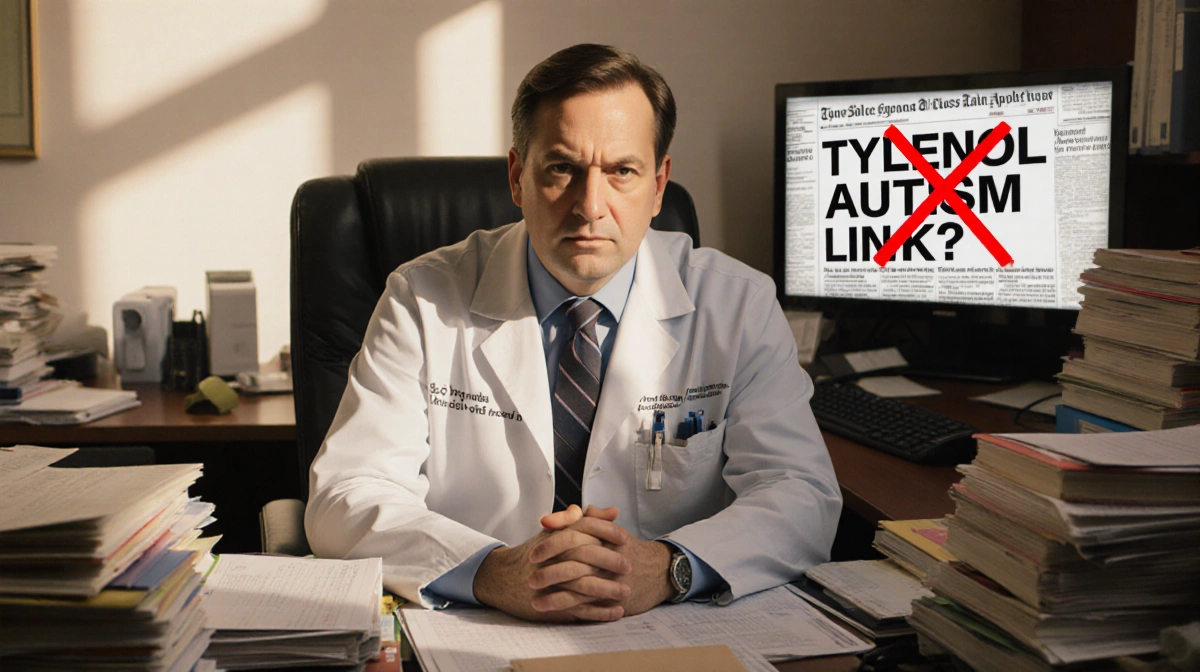
A major new analysis published Friday in The Lancet Obstetrics, Gynaecology, & Women’s Health concludes that taking acetaminophen during pregnancy does not increase the risk of autism, ADHD, or intellectual disability in children. The report directly contradicts warnings issued last year by President Donald Trump and Health Secretary Robert F. Kennedy Jr., who told expectant mothers to “fight like hell” to avoid the over-the-counter pain reliever.
Rigorous Review Clears Acetaminophen
An international team of seven researchers from the U.K., Italy, and Sweden screened thousands of studies and identified 43 that met strict quality standards. Each study compared pregnancies with acetaminophen exposure to those without, used medical records or clinician-verified questionnaires, and disclosed mothers’ health histories and other medications.
After rating each paper for bias and robustness, the authors homed in on the two strongest: large sibling-comparison studies that controlled for genetics, home environment, and socioeconomic status. All three analytical approaches reached the same conclusion-no association between prenatal acetaminophen and neurodevelopmental disorders.
“No matter which way they analyze them, they find that acetaminophen doesn’t cause ADHD or autism or intellectual disability,” said David Mandell, a psychiatry professor at the University of Pennsylvania who was not involved in the work.
White House Warning Sparked Patient Anxiety
Trump and Kennedy unveiled their caution at a September press conference, citing unsubstantiated autism fears. The announcement triggered a flood of worried calls to obstetricians.

“The day after this declaration, actually, we had a massive increase in phone calls and emails from women,” said Dr. Francesco D’Antonio, professor of fetal medicine at Italy’s University of Chieti and co-author of the new review.
Dr. Asma Khalil, consultant obstetrician at St. George’s Hospital in London and fellow co-author, emphasized that untreated fever can endanger both mother and baby. She reiterated that acetaminophen “remains the first-line treatment that we would recommend if pregnant women have pain or fever.”
HHS Questions the Findings
The Department of Health and Human Services maintains that the debate is not settled. An agency spokesperson alleged the new paper engineers a finding by excluding evidence and designing a study biased toward showing no association.
“According to HHS, many experts have expressed concern about the use of acetaminophen during pregnancy,” said department spokesperson Andrew Nixon, pointing to a 2023 review led by Harvard T.H. Chan School dean Dr. Andrea Baccarelli that reported an autism link. Baccarelli declined to comment.
Mandell countered that the earlier review covered far fewer studies and failed to control for confounding variables such as underlying illness or concurrent medications. “At the very least, it suggests a sloppy search,” he said.
FDA Language Softer Than Presidential Posts
Although Trump wrote on Truth Social this month, “Pregnant Women, DON’T USE TYLENOL UNLESS ABSOLUTELY NECESSARY,” the FDA’s official September letter to physicians merely advised clinicians to “consider minimizing the use of acetaminophen.” The agency still deems the drug the safest over-the-counter option for pain and fever in pregnancy and calls an autism connection “an ongoing area of scientific debate.”
Researchers Say the Case Is Closed
Autism advocates argue the new paper should end the discussion.
“The question has been answered,” said Alycia Halladay, chief science officer at the Autism Science Foundation, who was not involved in the research. “There was never a relationship between acetaminophen and autism. We can stop talking about this now and focus on what does cause autism instead of confusing families and continuing to blame the mother.”
Key Takeaways
- A gold-standard evidence review of 43 studies found no connection between prenatal acetaminophen and autism spectrum disorder, ADHD, or intellectual disability
- Presidential warnings last fall triggered widespread patient anxiety and calls to clinics worldwide
- Health authorities, including the FDA, still recommend acetaminophen as the preferred treatment for pain or fever during pregnancy
- Scientists urge shifting research dollars toward proven autism risk factors rather than re-litigating settled questions