
At a Glance
- T. rex needed nearly four decades to reach full 8-ton size
- Growth rings from 17 specimens show lifespan of 45-50 years
- 15-20 years longer maturation than previously thought
- Why it matters: Rewrites the life history of Earth’s largest land predator
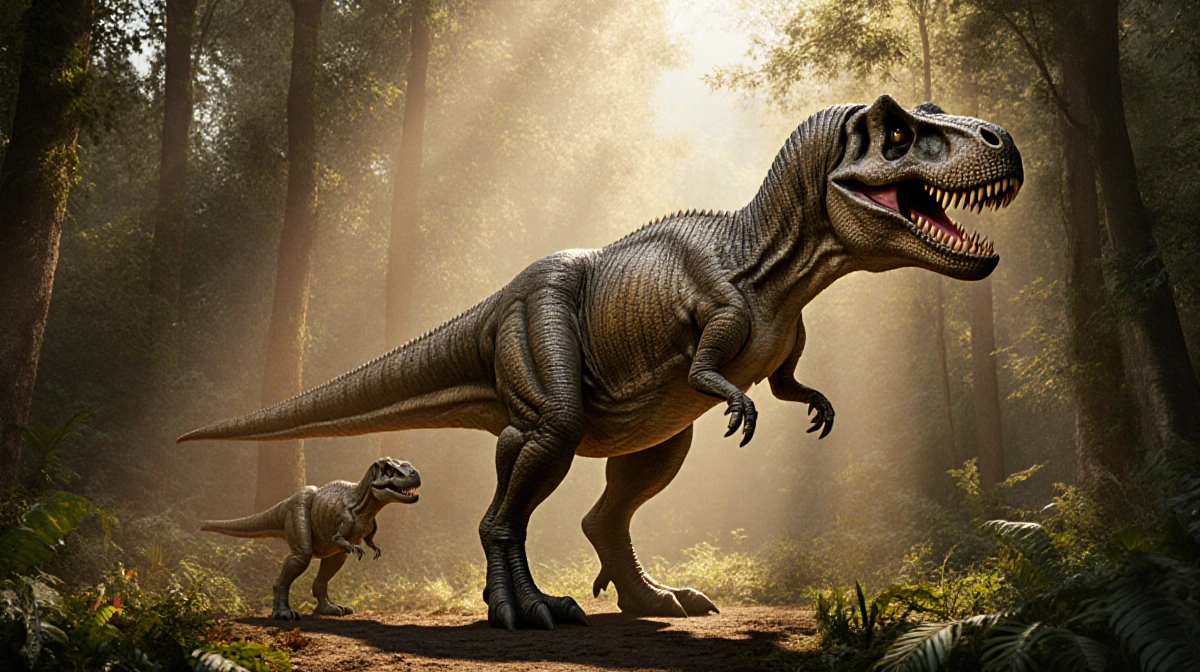
Tyrannosaurus rex, the largest predator to ever walk on Earth, matured far more slowly than scientists once believed. A new analysis of fossil bones indicates the dinosaur required 35 to 40 years to reach its colossal adult form-adding roughly 15 to 20 years to earlier estimates.
New Growth Timeline
Paleontologists examined annual growth rings preserved inside fossilized bones, much like tree rings reveal a tree’s age. The team sampled thigh and shin bones from 17 individual T. rex, assembling the largest data set ever collected for the species.
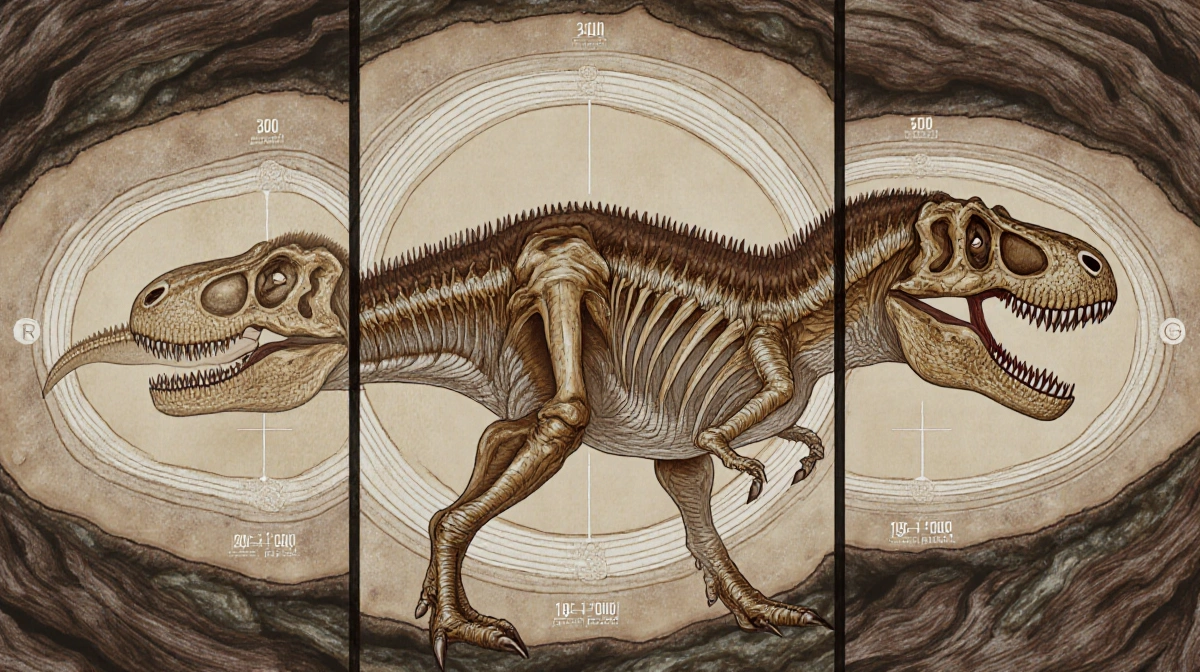
Using polarized light, researchers detected previously invisible growth marks. “Examining the growth rings preserved in the fossilized bones allowed us to reconstruct the animals’ year-by-year growth histories,” said Holly Woodward, professor of anatomy at Oklahoma State University and lead author of the study published in PeerJ.
| Age (Years) | Life Stage | Approx. Mass |
|---|---|---|
| 0-10 | Juvenile | < 1 ton |
| 10-20 | Sub-adult | 1-4 tons |
| 20-30 | Young adult | 4-6 tons |
| 30-40 | Late growth | 6-8 tons |
| 35-50 | Full adult | ~8 tons |
The composite growth curve now shows a steady, prolonged expansion rather than a sudden adolescent surge.
What Changed
Earlier studies suggested 30 years was the upper age limit for T. rex. The new ring counts point to a 45- to 50-year lifespan, pushing back the final growth phase into the dinosaur’s fourth decade.
“The composite growth curve provides a much more realistic view of how Tyrannosaurus grew and how much they varied in size,” explained Nathan Myhrvold, mathematician and paleobiologist at Intellectual Ventures, who led the statistical analysis.
Ecological Impact
A longer maturation window meant juvenile tyrannosaurs occupied different ecological niches than their massive parents. “A four-decade growth phase may have allowed younger tyrannosaurs to fill a variety of ecological roles within their environments,” noted Jack Horner, researcher at Chapman University and co-author. “That could be one factor that allowed them to dominate the end of the Cretaceous Period as apex carnivores.”
Key Takeaways
- Fossil bone rings show T. rex kept growing until age 40.
- Lifespan stretched to 45-50 years, not the earlier 30.
- Slower growth created age-based roles within the species.
- Study doubles the known maturation window for the iconic predator.
The massive predator, famed for its powerful build and bone-crushing bite, continues to defy simple summaries as scientists piece together its life history.