

At a Glance
- Texas faces heightened wildfire risk this winter and spring as dormant grasses dry and winds strengthen
- Above-normal grass growth in 2025 sets up 136% surge in fire responses since October
- Areas west of I-35 carry heavy fuel loads capable of producing fast-moving, hard-to-control blazes
- Why it matters: Warmer, drier La Niña conditions forecast through March could put homes, lives and millions of acres in jeopardy
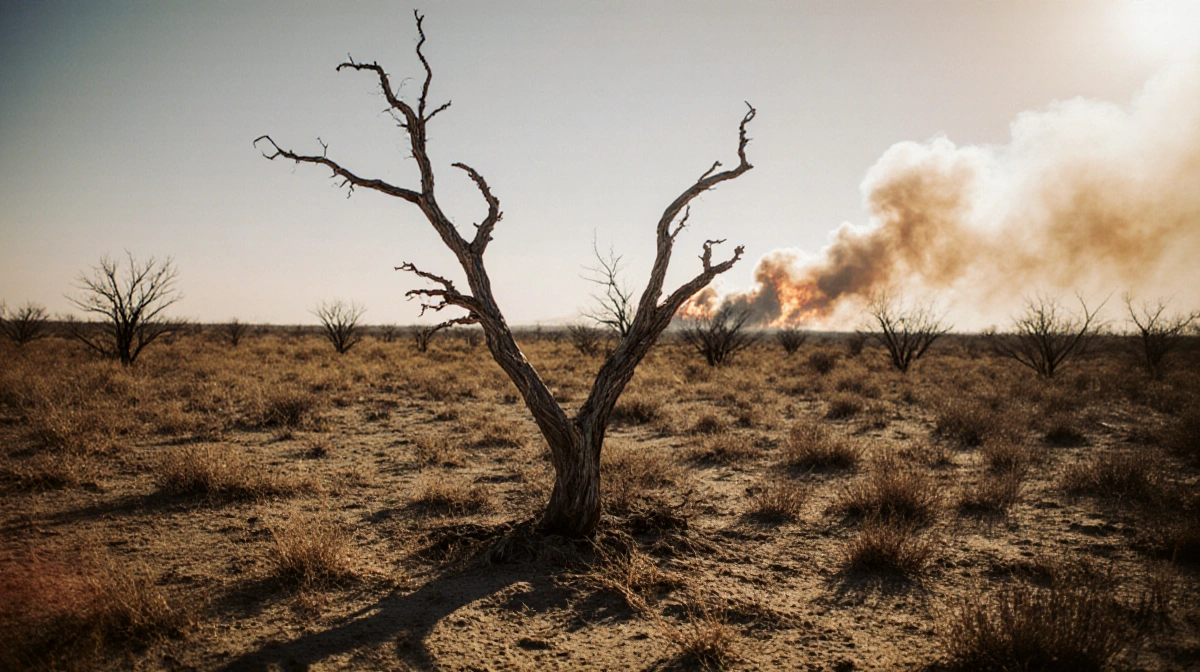
Texas’ dormant wildfire season is shaping up to be far more active than usual, with state forecasters warning that abundant grasses and a developing La Niña pattern will elevate the threat of large, wind-driven fires across broad sections of the state.
Surging Wildfire Activity
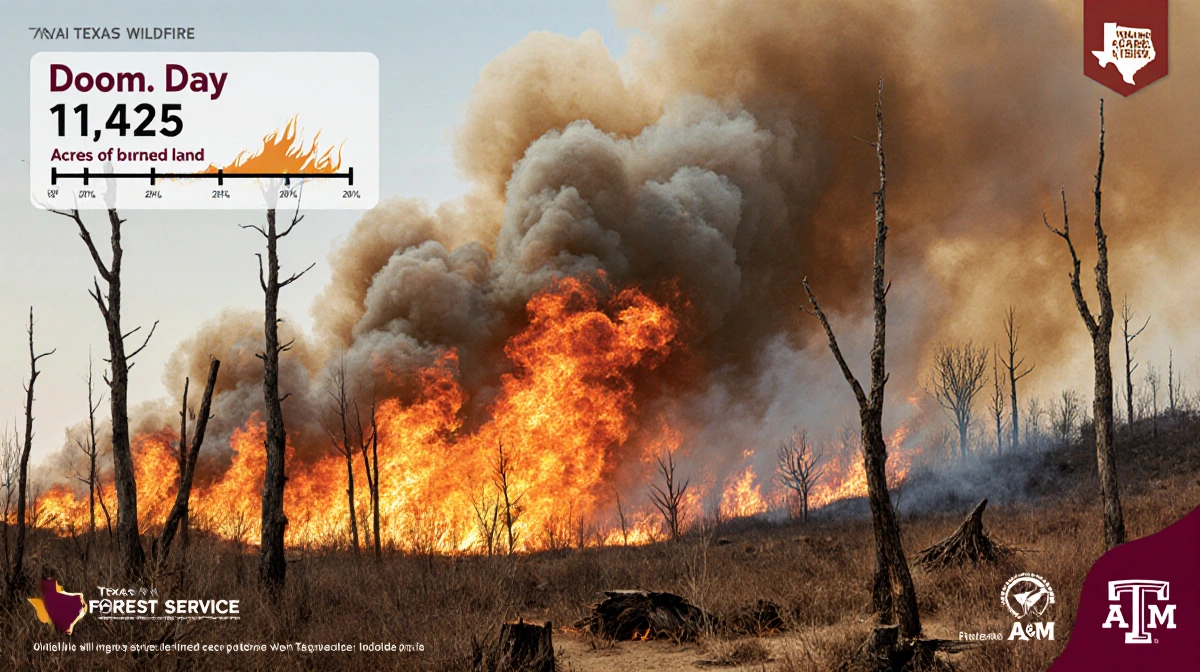
The Texas A&M Forest Service said Friday that its personnel have already responded to 434 wildfires burning 11,425 acres from October 2025 through mid-January 2026. That level of activity is 136% above normal for the period.
Winter and spring mark the state’s dormant fire season, when freeze-cured grasses and strong post-frontal winds historically align to spark rapid fire growth. This cycle is amplified in 2026 by last year’s robust grass crop, officials said.
“Wildfire activity has increased across the state, driven by underlying drought conditions and above-normal grass production from last year’s growing season,” Fire Chief Jared Karns said. “With a La Niña climate pattern forecasted, Texas is expected to experience more conditions that favor wildfire activity more often.”
Where Risk Is Highest
The Forest Service identified a wide corridor along and west of Interstate 35 as the primary concern zone:
- High Plains
- Rolling Plains
- Southern Plains
Each region now carries heavy grass loads that can support large, high-intensity fires once humidity drops and winds increase. Similar hazards extend into the Hill Country and Cross Timbers, while South Texas and the Lower Gulf Coast remain relatively protected until a hard freeze cures local grasses.
La Niña Influence
The U.S. Climate Prediction Center projects La Niña conditions for January-March 2026. The pattern typically funnels storms north of Texas, leaving the state warmer and drier than average-prime weather for wildfire spread.
“These outbreak events have historically resulted in multiple large, high-impact wildfires that can be difficult to contain and are an immediate threat to public and firefighter safety,” said Luke Kanclerz with the Forest Service’s Predictive Services department.
Data since 2005 illustrate the stakes: fires that ignite under Southern Plains Wildfire Outbreak conditions represent only 3% of reported wildfires yet account for 49% of total acres burned. Under such scenarios, dormant grasses desiccate within hours, and a single spark can evolve into a fast-moving conflagration.
Human Factor
People start nine out of 10 wildfires in Texas. The Forest Service urges residents to avoid outdoor activities that could generate sparks whenever warm, dry and windy conditions develop. Anyone spotting smoke or flames should contact local authorities immediately.
Current fire status updates are available on the Texas A&M wildfire information page.
Historic Context
Texas has seen comparable-often worse-dormant-season outbreaks. April 2011 brought the Possum Kingdom Complex Fire, four closely clustered blazes that:
- Scorched 126,000 acres
- Destroyed 168 homes and two churches
- Occurred during the driest 12-month span on state record (August 2010-July 2011), according to News Of Fort Worth‘s Inside the Storm: Texas Burning docu-series
That same year, the August PK 101 Ranch fire added another 6,000 acres and nearly 40 homes south of Possum Kingdom Lake.
The most destructive fire of the 2011 season ignited September 4 near Austin. The Bastrop County Complex Fire:
- Burned 32,000 acres
- Claimed two lives
- Destroyed more than 1,600 homes and structures
- Consumed 96% of 6,565-acre Bastrop State Park
Overall, 2011 saw over 31,000 fires burn more than four million acres and destroy 2,947 homes statewide.
Key Takeaways
- Grass, not timber, drives winter-spring fire risk in Texas; abundant 2025 growth now provides ample fuel
- La Niña’s warmer, drier forecast through March raises the odds of repeat outbreak conditions
- Human activity remains the leading cause, making prevention and quick reporting critical
- Residents west of I-35 should prepare for elevated danger and heed burn-ban and outdoor-use restrictions