
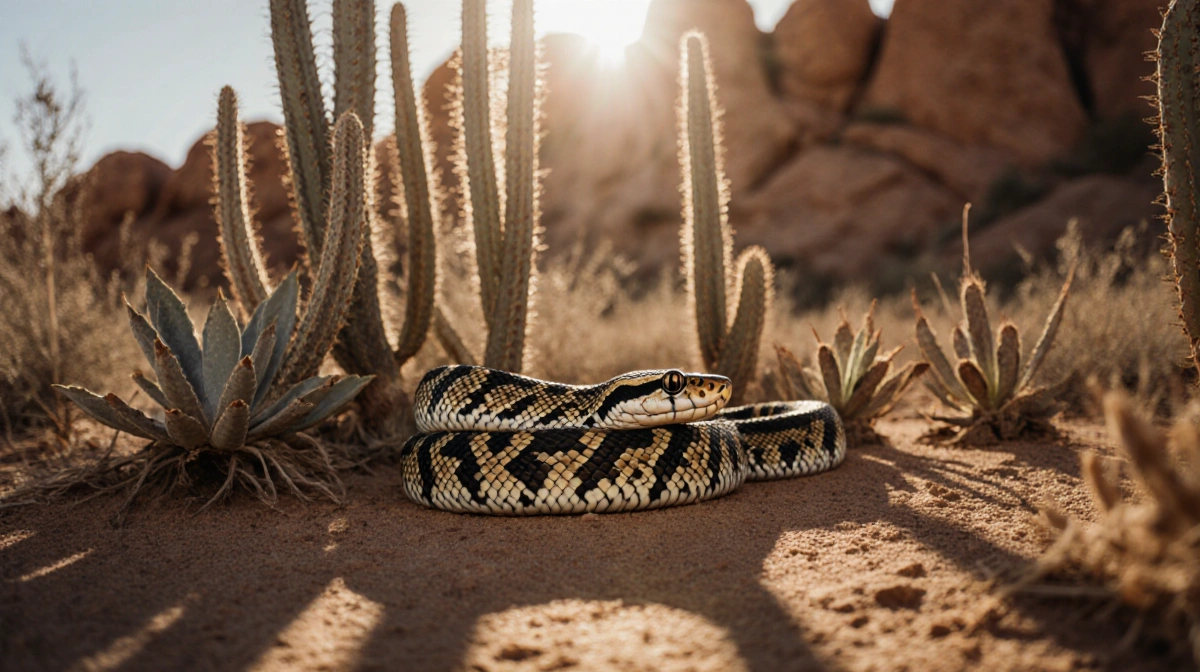

At a Glance
- A western diamondback rattlesnake was removed from an Argyle garage in November
- The three-foot specimen is the first officially documented in Denton County
- Preserved at UT Arlington for scientific study
- Why it matters: Confirms the venomous species now occupies North Texas county previously thought rattlesnake-free
A routine garage call has produced the first confirmed record of a western diamondback rattlesnake in Denton County, closing a long-standing gap in the species’ documented range.
Surprise Discovery in Argyle
Rob Boles, who regularly helps neighbors remove unwanted snakes, responded to a garage in Argyle late last year. After spotting the coiled rattler, he extracted the snake and later donated it to researchers.
“We walk out in the garage and I’m like, ‘Oh, look! Oh my, it is a rattlesnake,'” Boles recalled.
The find occurred in November, a time many Texans assume snakes are dormant. Boles noted that warm winter days can still trigger activity.
First Official Record for Denton County
The preserved specimen now resides at the University of Texas at Arlington’s Amphibian and Reptile Diversity Research Center, where staff confirmed its significance.
“This western diamondback rattlesnake has been preserved for science because where it was found is very uncommon,” said Greg Pandelis, collections manager and biological curator at the center. “Since it was too late in the season to relocate it, they decided to donate it here … where we can actually study it and learn some really important things about what’s going on with these snakes in Texas.”
Western diamondbacks are well studied across most of Texas, yet Denton County had never produced a verified sighting-until now.
“We’re really excited about this because although this is a very well-studied species that occurs throughout most of Texas, other than the eastern part, to date, there’s never been an official recording of one from Denton County,” Pandelis added.
Implications for North Texas
Rather than a stray individual, Pandelis believes the snake signals an established, if small, population that had simply gone unnoticed.
“This isn’t a super long rattle. It’s kind of typical with what you see of wild rattlesnakes,” he said.
As spring temperatures rise, snake encounters are likely to increase. Boles urged residents to keep a safe distance from any unidentified snake.

“If you don’t know what it is, step away. Two steps and you’re away; if it’s a dangerous snake, with two steps you are out of danger,” Boles advised.
Cameron R. Hayes reported for News Of Fort Worth.