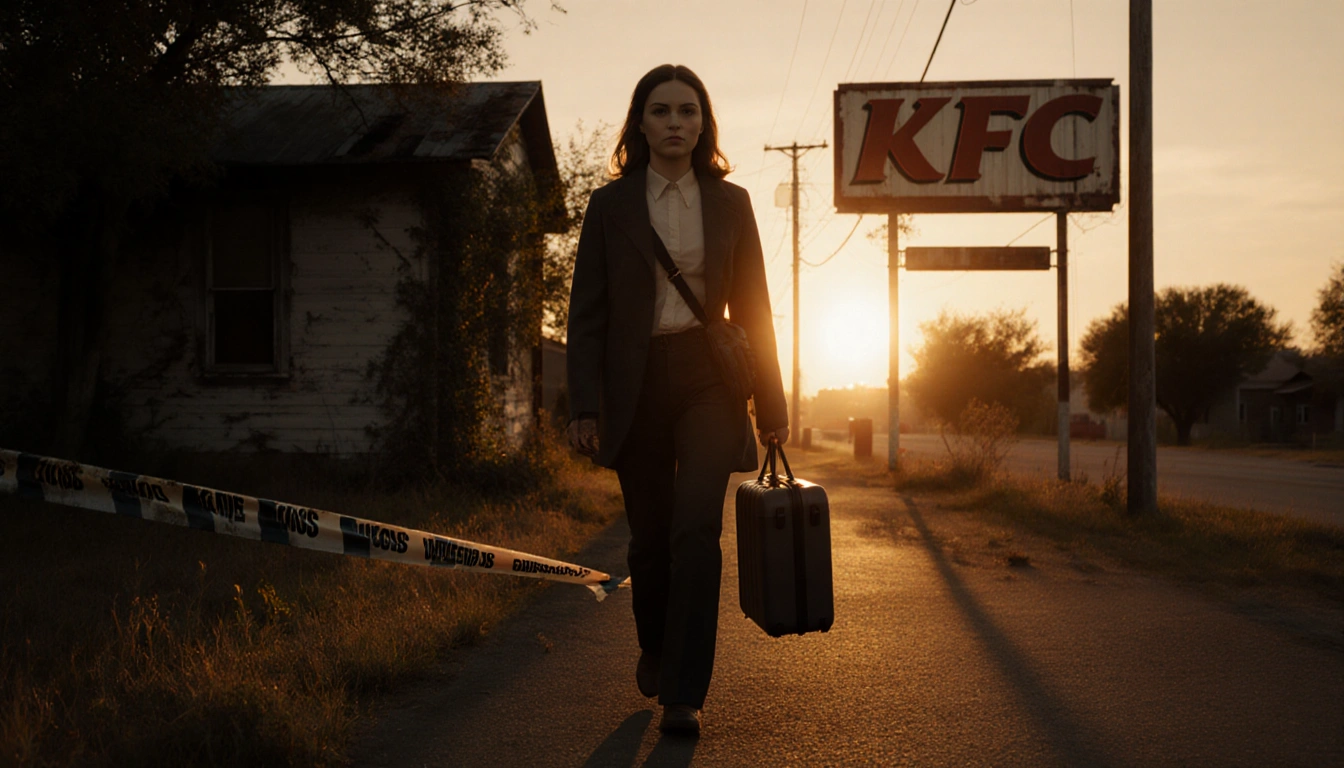
After more than four decades, the Texas Rangers announced that they have identified the final suspect in the 1983 KFC murders, a case that had left East Texas and the nation searching for answers.
The Cold Case
In September 1983, the bodies of five victims—Opie Hughes, Mary Tyler, Joey Johnson, David Maxwell, and Monty Landers—were found in rural Rusk County. Each was shot execution‑style in the back of the head, and Hughes had also been sexually assaulted. The victims had been taken from a Kilgore KFC the night before, during an armed robbery. Two men, Romeo Pinkerton and Darnell Hartsfield, were convicted in 2007 and 2008 after DNA linked them to the crime. However, a DNA sample from the victims’ clothing did not match either man, suggesting a third perpetrator.
Breakthrough Through DNA and Genealogy
In 2023, the Texas Rangers flagged the case for testing under the Sexual Assault Kit Initiative (SAKI), a DOJ‑funded program that helps solve cold cases. In July 2024, DNA from Hughes’ clothing was sent to Bode Technologies for advanced testing and genealogy. By May 2025, investigators had narrowed the search to three brothers in East Texas. In November, Devan Riggs was confirmed as the third suspect. Riggs died more than a decade ago, so no arrests can be made, but the case is now officially closed.
Reactions from the Community
“This case has just kind of hung over East Texas not being solved for so long, so it’s a relief,” said Jo Lee Ferguson, a longtime reporter for the Longview News‑Journal who covered the case for over 30 years alongside her colleagues. “I think there were probably a lot of people who thought this was never going to happen, that there were never going to be final answers about what happened.”
“The police, the crime lab folks, the crime scene investigators, we all have to go on to the next case and the next case and the next case. That doesn’t happen for the families. They stay with that one case continually because that pain is there,” said Patricia Eddings, a distinguished senior lecturer in forensics at UT Arlington’s Criminology Department. “I started into police work in 1974. I worked in crime labs in Mississippi and New Mexico and in Texas. And so I have been around so many cases throughout my career. Those cases never leave that family.”
Eddings added, “Looking to find connections between people, between places, between items of evidence. They were so diligent in everything they did.” She also noted, “How these people that love this person that died, have been impacted by this case and to be able to show that closure and what that means to them – that’s amazing.”
Ferguson reflected on the remaining questions: “We’re still missing the how did this happen and why were these people at the restaurant? Why did they kidnap these people and kill them? I don’t think we’re ever going to find that out, because as the prosecutors said, the one living suspect has declined to talk to them about what had happened exactly.” She concluded, “I think the closure is good. We know who all did it, but there will always be questions.”
Acknowledgments
The Texas Rangers thanked the Rusk County Sheriff’s Office, Kilgore Police Department, Bode Technologies, and DPS crime labs for their work.
Key Takeaways

- Devan Riggs identified as the final suspect in the 1983 KFC murders, closing a 40‑year‑old case.
- Advanced DNA testing and genealogy were crucial in linking the third perpetrator.
- While closure has been achieved, many questions about the motive and circumstances remain unanswered.
Closing paragraph: The identification of Devan Riggs brings long‑awaited peace to the families of the victims, but the story also highlights how technology can finally solve cold cases, even when the suspect is no longer alive.