


> At a Glance
> – 33 state laws take effect January 1, covering AI, jail oversight, taxes, and schools
> – 287(g) jail contracts become mandatory for most counties; state offers $80k-$140k grants
> – STAAR test scrapped for three shorter exams starting next school year
> – Why it matters: Texans could face faster evictions, new app-store rules, and the nation’s toughest AI oversight
Texans wake up Thursday to a bundle of new rules-everything from how jails handle immigration holds to how kids take standardized tests. Lawmakers passed the measures last session, and the final batch of 33 officially kicks in January 1.
Immigration Enforcement in County Jails
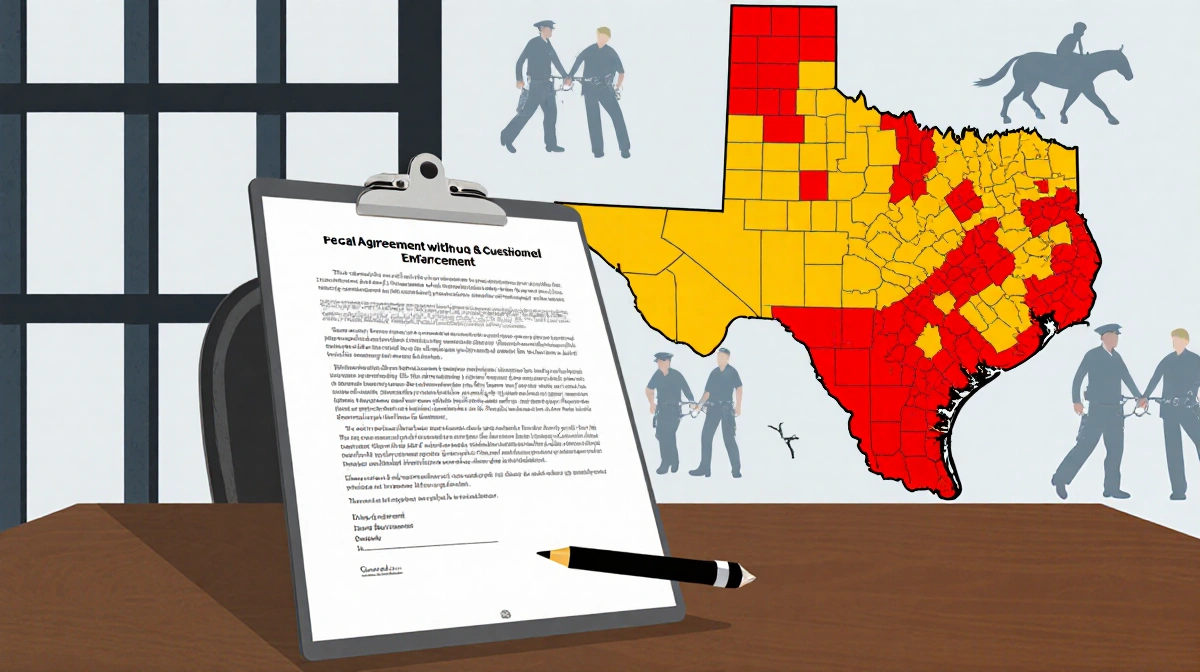
Senate Bill 8 now requires most counties running jails to sign formal 287(g) agreements with U.S. Immigration & Customs Enforcement. Sheriffs can serve federal warrants and ask inmates about immigration status. The state will funnel $80,000-$140,000 to each compliant county, scaled by population.
Supporters claim the partnerships boost public safety. Critics counter the practice invites racial profiling and may scare immigrant victims away from reporting crime.
App-Store Oversight Hits Pause
Senate Bill 2420, branded the App Store Accountability Act, would have forced Apple, Google, and other platforms to verify ages and secure parental consent before minors download paid apps or make in-app purchases. A federal judge on December 23 issued a preliminary injunction, ruling the statute likely clashes with the First Amendment. Enforcement is frozen while the state appeals.
Education Testing Overhaul
House Bill 8 retires the single-day STAAR exam. Starting next school year, students will sit for three shorter tests spaced through the year. Districts say the switch eases stress on pupils and teachers; most pieces of the law are already active.
Property-Tax Relief for Businesses
Voters OK’d House Bill 9 in November. It lifts the business inventory-and-equipment exemption from $2,500 to $125,000. Small-business groups praise the cap jump, yet the Legislative Budget Board projects local governments could lose $442 million in fiscal-year 2027 revenue unless they adjust tax rates.
Faster Evictions for Squatters
Senate Bill 38 short-circuits court timelines for removing unauthorized occupants. Key changes:
- Notice can be delivered by mail, in person, or electronically
- Trials must occur within 10-21 days
- Local courts cannot add extra procedural steps
Property owners welcome the speed, while tenant advocates warn lawful renters may lose precious time to mount a defense.
First-in-the-Nation AI Regulation
House Bill 149, dubbed the Texas Responsible Artificial Intelligence Governance Act, creates what backers call the country’s most comprehensive AI rulebook, effective January 1, 2026. The law:
- Defines AI systems broadly-machine learning, generative models, biometric tools
- Bans AI use for discrimination, self-harm facilitation, social scoring, biometrics abuse, and non-consensual sexually explicit content
- Requires transparency disclosures and consent for biometric identification
- Empowers the Texas Attorney General to levy civil penalties
- Establishes a statewide AI regulatory sandbox and the 13-member Texas Artificial Intelligence Council to shape best-practice guidelines
Key Takeaways
- Mandatory ICE jail contracts begin now; counties must opt-in or risk losing state funds
- STAAR is gone-students face three mini-tests instead of one high-stakes exam
- Business inventory taxes drop sharply, but cities may raise other levies to compensate
- Eviction speed increases for alleged squatters, trimming court delays
- AI oversight launches next year, with broad definitions and stiff penalties for violators
More bills will phase in throughout 2025; the full roster is available on the state legislature’s website.