

In a move that will reshape Texas high‑school athletics, the University Interscholastic League (UIL) announced that the enrollment threshold for its largest class, 6A, has been lowered from 2,275 to 2,215 students. The change expands the 6A roster to 251 schools, bringing more competition into the top tier.
Updated Conference Cutoffs
- Conference 6A: 2,215 and above – 251 schools
- Conference 5A: 1,305 to 2,214 – 250 schools
- Conference 4A: 550 to 1,304 – 224 schools
- Conference 3A: 246 to 549 – 232 schools
- Conference 2A: 105 to 245 – 225 schools
- Conference 1A: 104.9 and below – 223 schools
These figures replace the previous 6A cutoff of 2,275 students and are based on the latest snapshot enrollment data released by the UIL.
Football Division Breakdown
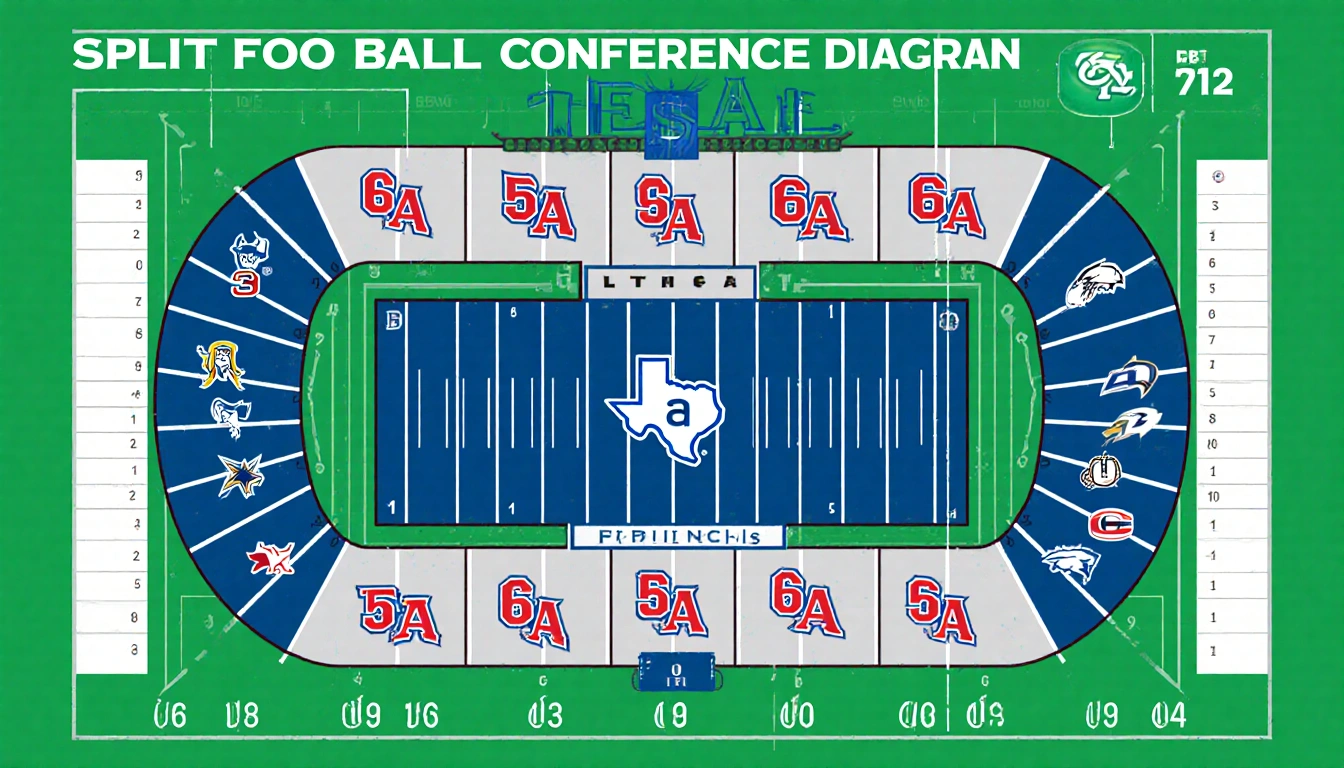
For football, the UIL has split conferences 1A through 5A into two divisions, while 6A remains a single division. The updated numbers are:
- 5A Division I: 1,830 to 2,214 – 127 schools
- 5A Division II: 1,305 to 1,829 – 119 schools
- 4A Division I: 896 to 1,304 – 103 schools
- 4A Division II: 550 to 895 – 102 schools
- 3A Division I: 367 to 549 – 102 schools
- 3A Division II: 246 to 366.9 – 102 schools
- 2A Division I: 175.6 to 245.9 – 103 schools
- 2A Division II: 105 to 175.5 – 102 schools
- 1A Division I: 57.6 to 104.9 – 79 schools
- 1A Division II: 57.5 and below – 80 schools
These thresholds will determine which schools compete against each other during the football season.
Implications for Key Schools
“Our partners at The Dallas Morning News said the drop in student population for the Class 6A cutoff means 12‑time state champion Aledo will test its dominance in 6A next season and that the Frisco ISD will have a Class 6A school for the first time. The paper reported that 2025 6A Division II state finalist DeSoto could play in 5A Division I unless it opts to stay in the top class.”
The adjustment gives Aledo a chance to prove its legacy in the newly expanded 6A field, while Frisco ISD will, for the first time, field a team in the largest classification. DeSoto faces a decision: remain in the top class or move down to 5A Division I if it chooses to stay.
Sport‑Specific Cutoffs
The UIL notes that conference cutoffs for football, basketball, and volleyball may differ by campus. The league publishes sport‑by‑sport thresholds, allowing schools to compete against similarly sized programs in each discipline. This flexibility ensures fair competition across the state’s diverse athletic programs.
Upcoming District Realignments
The UIL is slated to release district realignments on Monday, Feb. 2, 2026, covering the 2026‑2027 and 2027‑2028 seasons. These realignments will redraw district boundaries based on the new enrollment figures, affecting travel schedules, rivalries, and playoff qualification paths for schools across Texas.
Enrollment Snapshot
Alongside the cutoff changes, the UIL released snapshot enrollment figures for Texas high schools. These data points provide a baseline for the reclassification process and help schools understand where they fall relative to the new thresholds.
Key Takeaways
- 6A threshold lowered to 2,215, adding 251 schools to the top class.
- Football divisions split 1A‑5A into two groups; 6A remains single.
- Aledo, Frisco ISD, and DeSoto face new competitive dynamics.
Closing Thoughts
The UIL’s decision to lower the 6A enrollment cutoff signals a shift toward more balanced competition across Texas high‑school sports. Schools now must reassess their athletic programs, coaching strategies, and travel logistics in light of the new classifications. With district realignments scheduled for early February 2026, stakeholders have a clear timeline to prepare for the upcoming seasons. The changes underscore the UIL’s ongoing commitment to fairness and parity in Texas athletics.