


At a Glance
- The U.S. and six allies launched “Pax Silica” to secure the global AI supply chain
- China controls 90% of rare earths vital for chips and AI systems
- Qatar and UAE set to join this week, expanding the coalition to nine nations
- Why it matters: China’s export restrictions last year crippled tech companies worldwide
The Trump administration is assembling a powerful international coalition to break China’s stranglehold on the critical materials powering artificial intelligence. Seven nations have already signed the Pax Silica declaration, with two more Arab powers preparing to join the economic security alliance.
Seven Nations, One Goal: Secure AI Supply Chains
The United States spearheads this initiative alongside Israel, Singapore, Japan, South Korea, Australia and the United Kingdom. Together they formed the coalition last month to safeguard silicon supplies essential for AI applications.
The alliance covers every level of the technology supply chain:
- Critical minerals and energy
- Advanced manufacturing and semiconductors
- AI infrastructure and logistics
- Software applications and platforms
- Frontier foundation models
- Information connectivity and network infrastructure
“It’s meant to be an operational document for a new economic security consensus,” undersecretary of economic affairs Jacob Helberg told Reuters on Sunday. The declaration commits members to partner on strategic technology supply chain stacks spanning compute, semiconductors, minerals refining, and transportation logistics.
The China Problem: Rare Earth Dominance
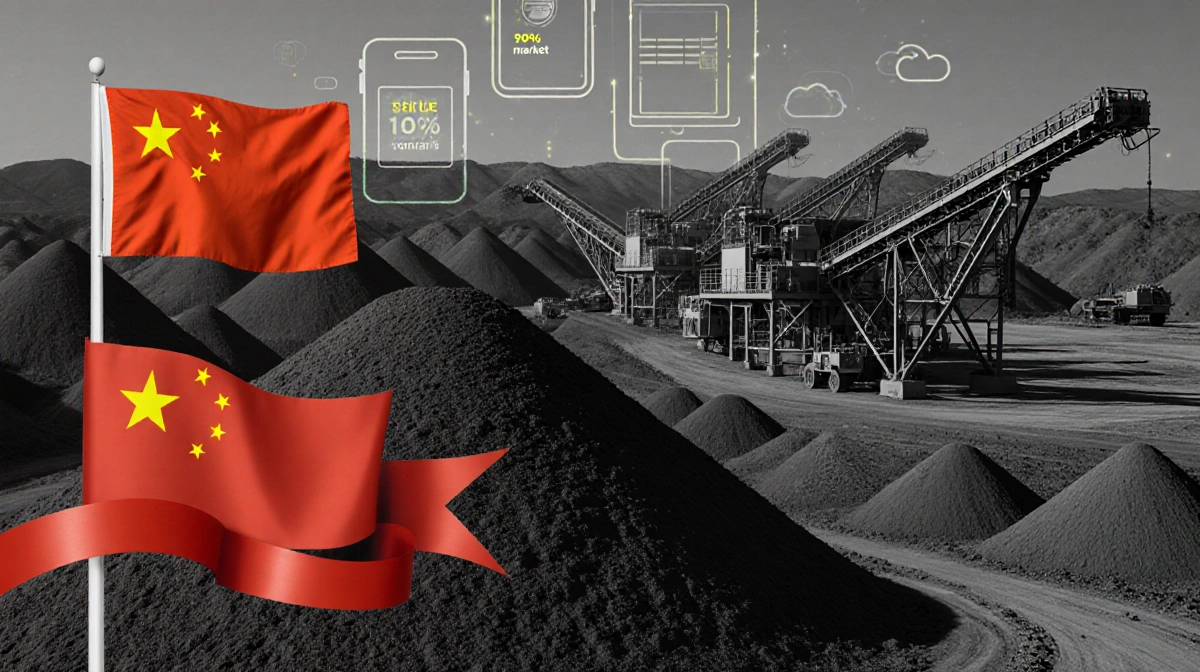
China’s overwhelming control of rare earth elements drives this unprecedented cooperation. Beijing commands roughly 90% of the world’s rare earth supply – minerals crucial for manufacturing computer chips used in smartphones and AI systems.
Last year China weaponized this advantage by restricting rare earth exports in retaliation for Trump’s tariff measures against Beijing. The countermeasures devastated the global tech industry and gave President Xi Jinping significant leverage in trade negotiations with Trump.
The United States has responded by leading calls to reduce dependence on Chinese critical minerals. Treasury Secretary Scott Bessent will push this agenda further as he hosts top finance officials from the EU, Canada, Japan, the U.K., Australia, India, Mexico, and South Korea this week.
Pax Silica: A Modern Roman Peace
The program’s name carries historical weight. Pax Silica references Pax Romana – the two-century period of Roman political stability and economic prosperity when the empire doubled in size through conquest while encompassing a quarter of the world’s population.
While “Silica” relates to “Silicon,” the term represents the coalition’s ambition to create a new era of technological dominance through allied cooperation rather than military conquest.
The Belt and Road Challenge
China’s influence extends beyond rare earths through the Belt and Road Initiative, an ambitious decade-old infrastructure investment project strengthening Beijing’s global trade ties. Chinese officials last year proposed a similar approach for AI development through a Shanghai-based global cooperation organization focused on open-source communities and joint research under Chinese terms.
Helberg outlined the coalition’s strategy to Politico: “By aligning our economic security approaches, we can start to have cohesion to basically block China’s Belt and Road Initiative – which is really designed to magnify its export-led model – by denying China the ability to buy ports, major highways, transportation and logistics corridors.”
Four Pillars of Economic Security Strategy
The State Department’s economic security strategy rests on four pillars, Helberg explained during a press briefing following the Pax Silica summit:
- Rebalancing trade
- Reindustrializing America
- Securing supply chains
- Stabilizing conflict zones through economic solutions “from sub-Saharan Africa to the Middle East”
This comprehensive approach addresses both immediate supply chain vulnerabilities and long-term strategic competition with China.
Expanding Alliance: Qatar and UAE Join
The coalition prepares for significant expansion as Qatar and the United Arab Emirates prepare to join this week. Their addition brings notable geopolitical complexity to the alliance.
The UAE normalized ties with Israel in 2020 under Trump’s Abraham Accords, establishing trade relations between the nations. However, Israel’s offensive in Gaza has somewhat cooled these newly-formed ties.
Qatar presents different challenges as a key mediator in Israel-Hamas negotiations with no formal diplomatic ties to Israel. Relations faced further strain after Israel bombed Doha in September 2025.
Despite these tensions, both Arab nations’ inclusion advances the coalition’s fourth pillar of stabilizing conflict zones through economic partnerships.
Broader International Engagement
Beyond the current seven-member coalition and upcoming Arab additions, the Trump administration has engaged multiple partners in Pax Silica discussions. The European Union, Canada, and Taiwan have all participated in talks about joining the initiative.
This expanding network demonstrates growing international recognition of supply chain security as critical to economic and national security in an AI-driven future.
Key Takeaways
The Pax Silica coalition represents a fundamental shift toward economic security alliances designed to counter China’s technological dominance. By securing critical supply chains through international cooperation, the United States and its allies aim to prevent future disruptions like those experienced during last year’s rare earth export restrictions.
The initiative’s success depends on maintaining alliance cohesion while expanding membership to include nations with complex regional relationships. As Qatar and UAE prepare to join, the coalition demonstrates its ability to bridge geopolitical divides in service of shared economic security interests.
With China continuing to expand its global influence through infrastructure investments and AI development initiatives, Pax Silica offers an alternative model for international cooperation based on allied economic security rather than individual national interests.