

At a Glance
- President Trump quietly appointed four new members to the Commission of Fine Arts this week
- The panel will review his controversial 90,000-square-foot East Wing ballroom project
- One appointee, James McCrery, previously led the $400 million project until Trump replaced him
- Why it matters: The appointments give the commission quorum just before key January meetings that could approve the historic expansion
President Trump has moved swiftly to reshape the federal panel overseeing his ambitious White House expansion plans, appointing four new members to the Commission of Fine Arts as his administration pushes forward with a massive 90,000-square-foot ballroom addition to the presidential residence.
The appointments, revealed Thursday in court documents, come as the administration faces legal challenges over the project that would fundamentally alter the historic mansion’s footprint. The new commissioners include James McCrery, an architect who previously spearheaded the $400 million ballroom project until Trump removed him from that role late last year.
New Appointments Create Quorum for Critical Vote
The four new appointees were disclosed in federal court papers filed by White House deputy assistant Heather Martin as part of ongoing litigation from the National Trust for Historic Preservation. The trust has sued to halt construction, arguing the administration violated federal laws by beginning demolition before completing required reviews.
The appointments solve a critical problem for the administration – the commission has been unable to meet for months after Trump dismissed six commissioners last fall. A seventh commissioner had previously resigned when their term expired after Trump took office.
With the new members, the commission now has enough members to conduct business at its January 22 meeting, where the East Wing Modernization project appears on the agenda. The panel had been scheduled to meet earlier in the week but couldn’t proceed due to lack of quorum.
Project Financing and Timeline
The White House maintains the expansion will be financed entirely through private donations, with Trump himself contributing to the $400 million price tag. Construction has already begun – the East Wing has been demolished to make way for the new ballroom.
According to Martin’s court filing, the administration plans to formally present the project to the commission on February 19 and March 19, when the panel could complete its review and potentially approve the controversial expansion.
Who Are the New Commissioners?
Beyond McCrery, the new appointees include:
- Mary Anne Carter of Tennessee, current chair of the National Endowment for the Arts and former staffer to Senator Rick Scott
- Roger Kimball of Connecticut, an art critic and conservative commentator
- Matthew Taylor of Washington, D.C.
McCrery’s appointment is particularly notable given his previous involvement with the project. He served on the commission as a Trump appointee from 2019-2024 and had led the ballroom design efforts until being replaced.
Legal Challenges Mount
The National Trust for Historic Preservation’s lawsuit argues the administration jumped the gun by starting construction before obtaining required approvals from both the Commission of Fine Arts and the National Capital Planning Commission, as well as Congress and public review.
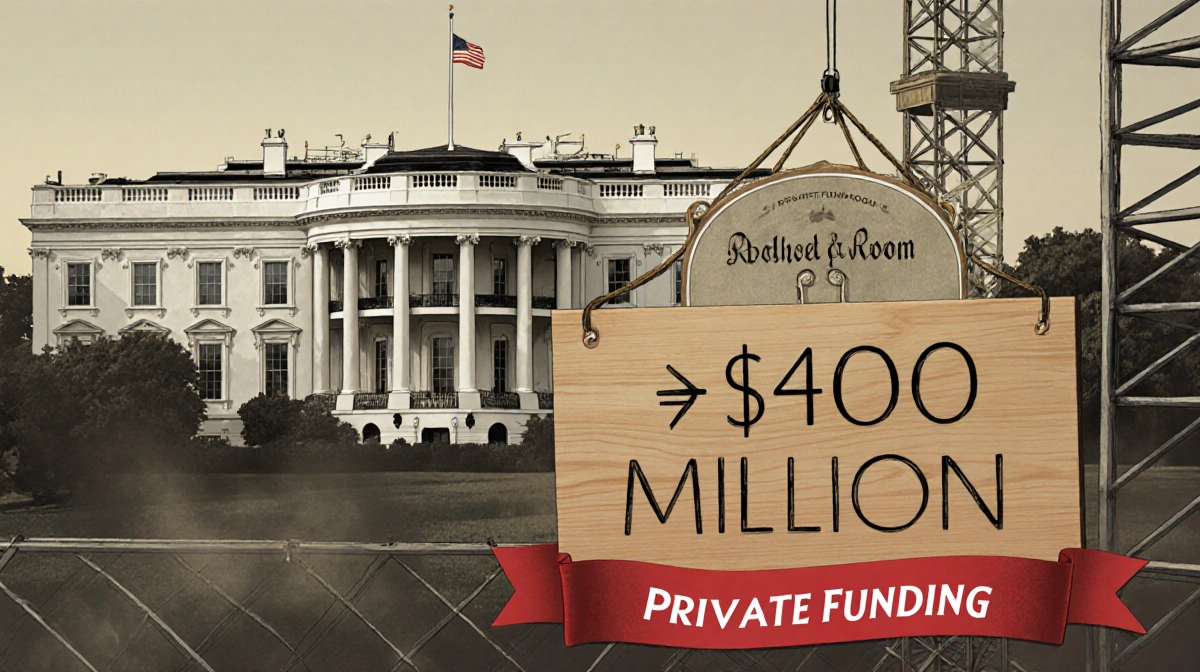
The National Capital Planning Commission, which also oversees federal construction projects, heard an initial presentation about the ballroom at its January 8 meeting.
During a White House briefing, press secretary Karoline Leavitt defended the administration’s actions, saying they have authority to demolish part of the East Wing based on “legal opinion.”
A Presidential Legacy Project
The proposed 90,000-square-foot addition represents more than just additional space – it would serve as a lasting physical legacy to Trump’s presidency. The project would dramatically expand the public face of the White House complex, creating a permanent landmark bearing his administration’s imprint.
The ballroom has been a longtime talking point for Trump, who has discussed building such a facility for years. If completed, the massive addition would stand for decades as a testament to his vision for expanding the presidential residence.
Key Takeaways
The Trump administration’s rapid appointment of new commissioners appears designed to expedite approval of the controversial White House expansion. With demolition already complete and the review process moving forward, the $400 million ballroom project seems poised to proceed despite ongoing legal challenges from preservation groups.
The appointments give the Commission of Fine Arts the quorum needed to vote on the project, potentially clearing a major hurdle for what would be one of the most significant physical changes to the White House complex in modern history.