
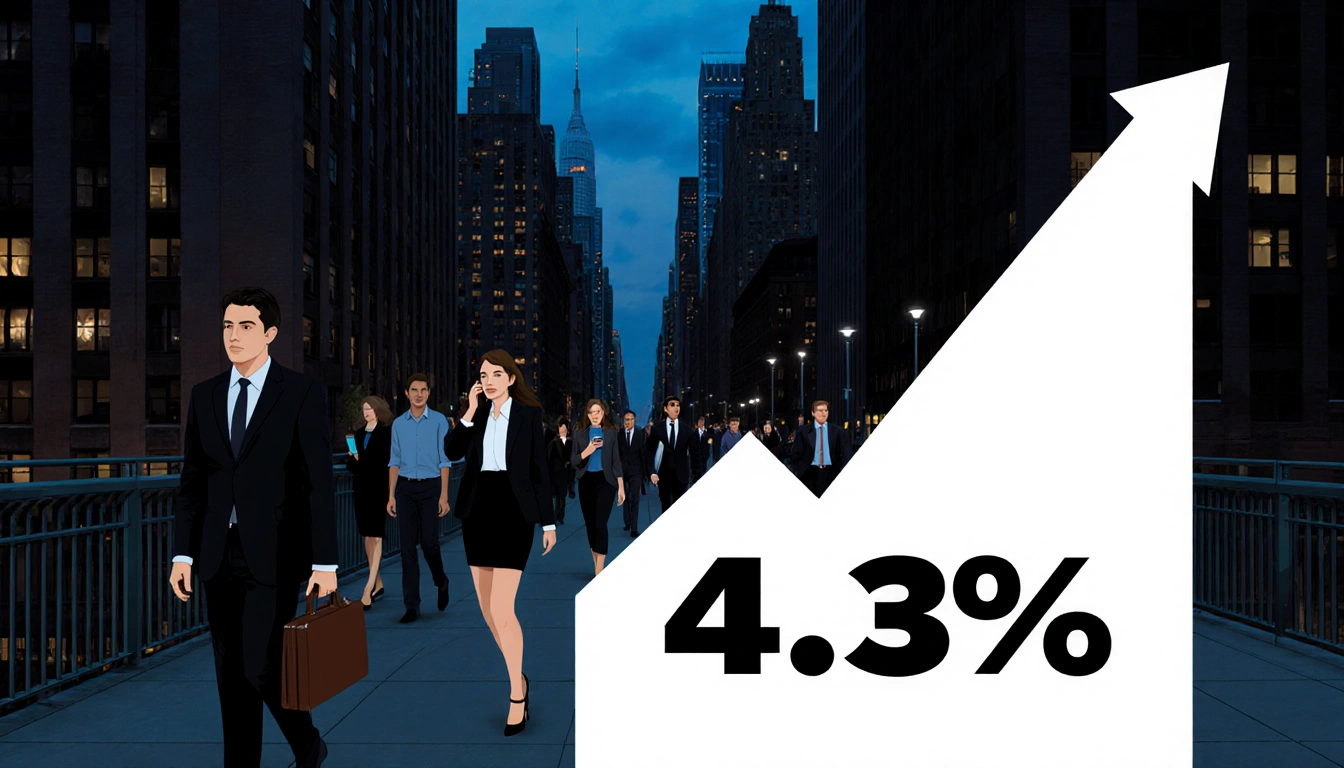

The U.S. economy accelerated at a 4.3% rate in the third quarter of 2024, the fastest growth in two years, according to a new estimate from the Bureau of Economic Analysis released Tuesday.
Q3 Growth Beats Expectations
The estimate, delayed by a historic government shutdown, shows that the economy grew 4.3% over July, August and September. Analysts and economists surveyed by Dow Jones had expected a 3.2% increase, making the reading the best quarter of growth for the U.S. in two years.
What Drove the Surge
The Bureau said the expansion was fueled by “increases in consumer spending, exports, and government spending,” while imports – a subtraction in GDP – fell. Consumer spending rose 3.5% on an annual basis, the best since the end of 2024, with services, health care and international travel contributing the most. Within health care, both outpatient services as well as hospital and nursing home services increased, the bureau said.
Consumer Divide and Political Reactions
Consumer spending has split between wealthy households that maintain their habits amid rising costs and middle- and lower-income households that have cut back in response to a weaker labor market and tariffs. After the GDP announcement, President Trump tweeted on Truth Social: “The TARIFFS are responsible for the GREAT USA Economic Numbers JUST ANNOUNCED,” “AND THEY WILL ONLY GET BETTER!” He also added that there is “NO INFLATION.”
Inflation, Debt and Market Outlook

Inflation climbed to 3% in September before falling to 2.7% in November, a decline that economists believe may stem from the lack of data collected during the shutdown. Credit card balances rose $24 billion in the third quarter, a 5.75% increase from a year earlier, according to the Federal Reserve Bank of New York’s 2025 third-quarter data. “Consumer spending had been volatile this year and the softening labor market implies a slower pace of spending next year,” Citigroup economists wrote.
Investment, AI and the Broader Economy
Investment in non-residential structures contracted at a 6.3% pace, noted Paul Ashworth, chief North America economist at Capital Economics. “At face value, that suggests the AI boom might have taken a step backwards, after driving GDP growth in the first half of the year,” he added, warning that more data may be required before a definitive call.
Sentiment and Market Reaction
Stocks traded near a flat line and Treasury yields rose slightly after the release. Consumer sentiment, measured by the University of Michigan’s Surveys of Consumers, improved in early December compared with November but dropped nearly 29% from December 2024. The Conference Board’s Consumer Confidence Index fell 3.8 points from the previous month, below the January peak; Dana M. Peterson, chief economist at the Conference Board, said inflation and tariffs were among the top factors affecting confidence. An NBC News Decision Desk Poll found that 35% of respondents said their finances were worse now, 41% said they were about the same as last year, and only 24% said they were better.
Context and Future Revisions
The new data also shows that the overall growth rate for the first three quarters of the year averages 2.5%, after a 0.6% contraction in Q1 and a 3.8% expansion in Q2. The average growth rate for 2024 is 2.4%, compared with 3.4% in 2023. Tuesday’s number is only an “initial estimate,” the first of three revisions that will be made as more data comes in. The third-quarter growth rate was originally scheduled to be released Oct. 30 but was delayed because of the government shutdown.
The 4.3% jump underscores the resilience of the U.S. economy, even as inflation, debt and consumer confidence present challenges for the months ahead.