
At a Glance
- Maduro captured by US forces overnight.
- 35 boat strikes have killed >115 people since September.
- Congress has not authorized US military action against Venezuela.
- Why it matters: The seizure raises questions about the legality of US foreign interventions and the limits of executive war powers.
The Trump administration’s overnight seizure of Venezuelan President Maduro and subsequent military actions have sparked a legal and congressional debate, as officials question the legality of the operation and its implications for U.S. foreign policy.
The Seizure and Military Operations
Maduro was transported on a U.S. warship to face narcoterrorism conspiracy charges in New York. The operation involved 35 boat strikes, killing more than 115 people since September. Legal experts describe the seizure as a blatant, illegal and criminal act.
Jimmy Gurule stated:
> “This is clearly a blatant, illegal and criminal act.”
Mark Nevitt stated:
> “I see no legal basis for us to go into another country and take a leader without an extradition treaty.”
Michael Schmitt stated:
> “The entire operation – the boat strikes as well as the apprehension of Maduro – are a clear violation of international law.”
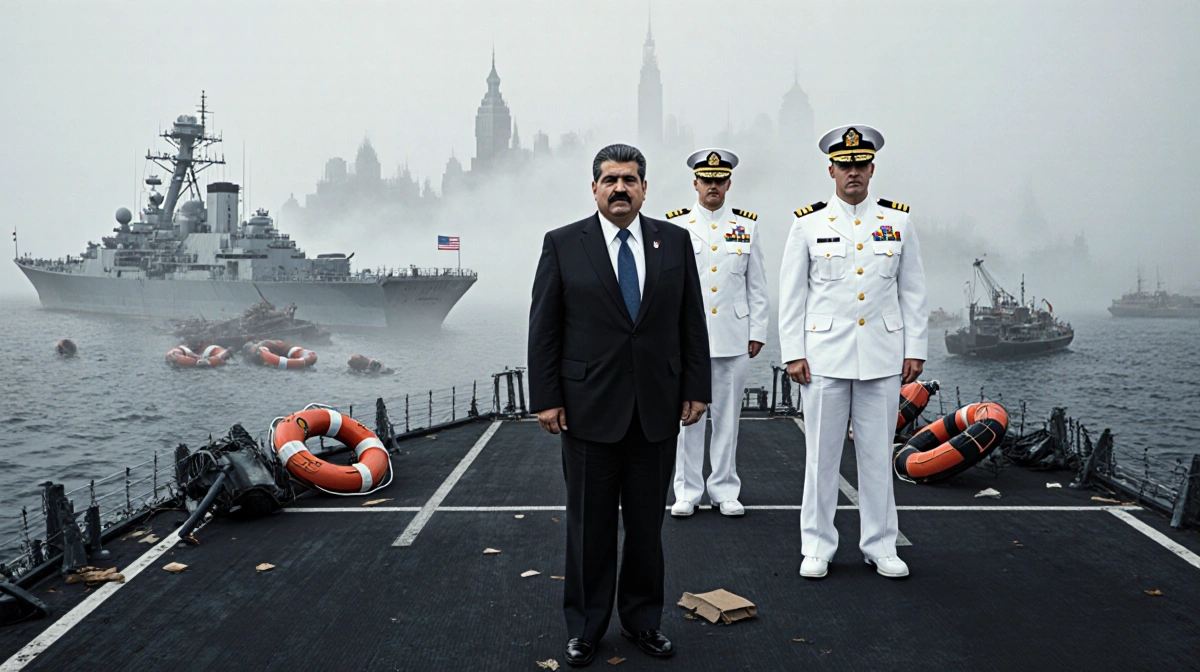
- 35 boat strikes
- >115 casualties
- Maduro captured
Congressional and International Law Response
Congress has not authorized any U.S. military strike or law enforcement move against Venezuela. The administration declared drug cartels unlawful combatants, asserting an armed conflict. This is an extraordinary assertion of presidential war powers.
Senate and House leaders were notified; Speaker Johnson is scheduling briefings; John Thune expressed gratitude; Marco Rubio explained the surprise nature.
Mark Warner warned:
> “Once this line is crossed, the rules that restrain global chaos begin to collapse, and authoritarian regimes will be the first to exploit it.”
> “America’s strength comes from our commitment to the rule of law, democratic norms, and constitutional restraint. When we abandon those principles, we weaken our credibility, endanger global stability, and invite abuses of power that will long outlast any single presidency.”
| Metric | Value |
|---|---|
| Boat strikes | 35 |
| Casualties | >115 |
| Target | President Maduro |
The seizure coincides 36 years after Panama’s Noriega surrender. In Panama, U.S. had national security interests; in Venezuela no such direct interests.
US agents have a history of snatching defendants abroad; example 1990 DEA bounty hunters in Mexico. Courts give deference to the president on national security but not absolute; Jimmy Gurule said.
Key Takeaways
- The operation raises legal questions about executive war powers.
- Congress has not authorized the actions, prompting a potential war-powers resolution.
- The precedent could influence future U.S. interventions abroad.
The seizure and subsequent actions have placed the U.S. at the center of a legal and political debate, raising questions about the limits of executive power and the future of U.S. foreign interventions.