
At a Glance
- US conducted a large-scale strike that captured Venezuelan President Maduro and his wife Cilia Flores.
- 35 drug-boat strikes since September have killed at least 115 people.
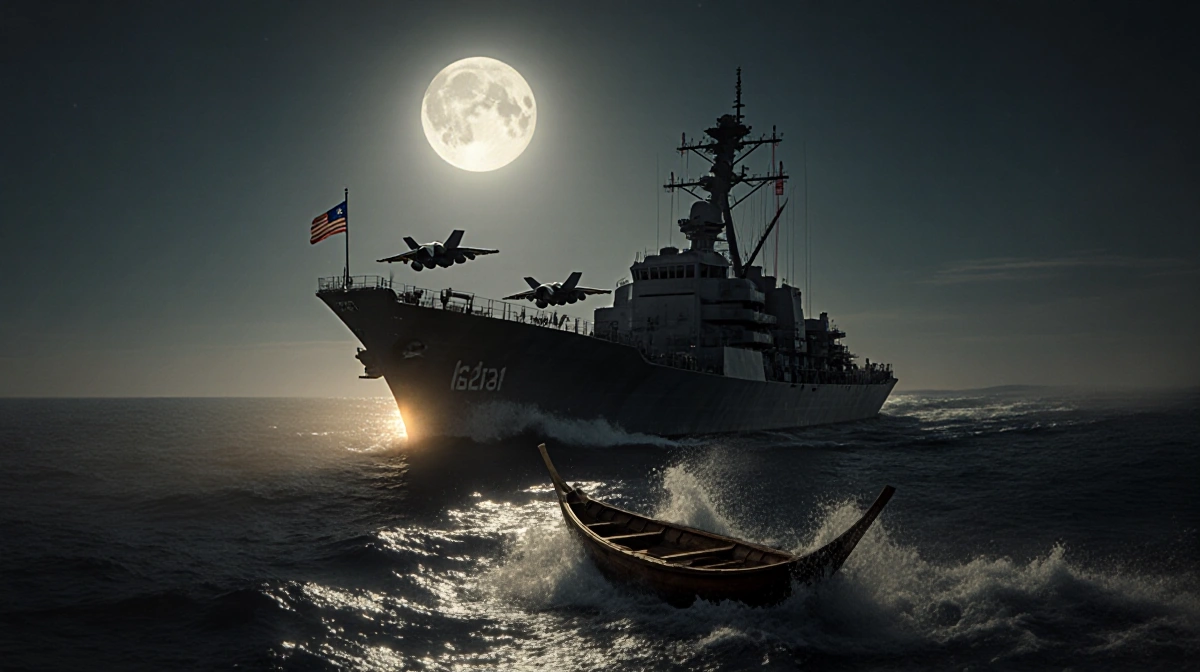
- The US fleet now includes 6,000 sailors and Marines, 3 guided-missile destroyers, 3 amphibious assault ships, F-35 jets, and a submarine.
- Why it matters: The operation marks a new level of military engagement between the United States and Venezuela, raising questions about sovereignty and international law.
The United States launched a large-scale strike on January 3, 2026 that captured Venezuelan President Nicolás Maduro and his wife, Cilia Flores. This event follows months of naval actions against alleged drug-smuggling vessels and a series of legal moves that have drawn international scrutiny.
US Military Actions
Since early September, the US has carried out 35 strikes on boats accused of smuggling drugs, killing at least 115 people. The White House describes the effort as an armed conflict with drug cartels aimed at stopping narcotics from entering the United States. The naval buildup, the largest in generations, includes:
- 3 guided-missile destroyers
- 3 amphibious assault ships
- F-35 fighter jets
- A submarine with cruise missiles
- 6,000 sailors and Marines
Venezuelan Response
President Nicolás Maduro called the U.S. operations an imperialist attack and urged Venezuelan citizens to protest. Attorney General Pam Bondi announced that Maduro and Flores will face charges after an indictment in New York. The U.S. claims it is in an armed conflict with drug cartels and that Maduro supports the international drug trade.
Timeline of Key Events
| Date | Event | Impact |
|---|---|---|
| Jan 20 | Trump signs executive order naming drug cartels as foreign terrorist organizations | Expands legal authority for U.S. actions |
| Feb 20 | Eight Latin American crime groups designated as foreign terrorist organizations | Signals heightened U.S. stance on drug trafficking |
| Aug 19 | Deployment of three guided-missile destroyers to Venezuelan waters | Begins naval buildup |
| Sept 2 | First strike on alleged drug-smuggling vessel | 2 casualties reported |
| Oct 2 | U.S. declares armed conflict with drug cartels | Justifies ongoing strikes |
| Oct 15 | CIA authorized covert operations in Venezuela | Expands U.S. military reach |
| Dec 10 | Seizure of an oil tanker carrying 2 million barrels of crude | Targets Venezuela’s oil economy |
| Dec 16 | U.S. orders blockade of sanctioned oil tankers | Intensifies economic pressure |
| Dec 30 | CIA conducts drone strike on a Venezuelan dock used by drug cartels | First direct U.S. operation on Venezuelan soil |
| Jan 3 | Large-scale strike captures Maduro and Flores | Culmination of months of military action |
The timeline illustrates how a series of legal, diplomatic, and military steps culminated in the dramatic capture of Maduro and Flores.
Key Takeaways
- The U.S. has conducted 35 drug-boat strikes, killing at least 115 people, since September.
- The naval buildup includes 6,000 sailors, 3 destroyers, and advanced aircraft, marking the largest U.S. presence in the region in generations.
- On January 3, 2026, the U.S. captured Venezuelan President Maduro and his wife, a move that could reshape U.S.-Venezuela relations and international law.

The capture of Maduro and Flores represents a watershed moment in U.S.-Venezuela relations, illustrating the extent of U.S. military power and the contentious nature of sovereignty in the region.