At a Glance
- Former Uvalde school officer Adrian Gonzales faces 29 counts of child abandonment or endangerment for his response during the 2022 Robb Elementary shooting
- Teachers testified they saw Gonzales outside the school but he didn’t immediately engage the shooter, despite being told where the gunman was headed
- Prosecutors argue Gonzales failed to follow active shooter protocol by not immediately confronting the gunman
- Why it matters: This trial could set precedent for holding law enforcement accountable during mass shooting responses
A former Uvalde school police officer’s trial continued Wednesday with emotional testimony from teachers who survived the May 24, 2022 shooting at Robb Elementary School that killed 19 students and two teachers. Adrian Gonzales has pleaded not guilty to 29 counts of child abandonment or endangerment for allegedly failing to stop the shooter.
Teachers Describe Chaos and Delayed Response
Meloyde Flores, a former Uvalde CISD teaching aide, testified she was outside when the shooting began and saw the gunman approach the school.
“He just stood there and lifted up his rifle, and I started running back,” Flores told jurors.
She said she saw Gonzales arrive on campus and tried to direct him to the shooter’s location.
“I just kept pointing. He’s going in there. He’s going into the fourth-grade building,” Flores testified, describing how the officer paced back and forth.
During cross-examination, defense attorneys questioned inconsistencies in her testimony, including details about Gonzales’ patrol vehicle.
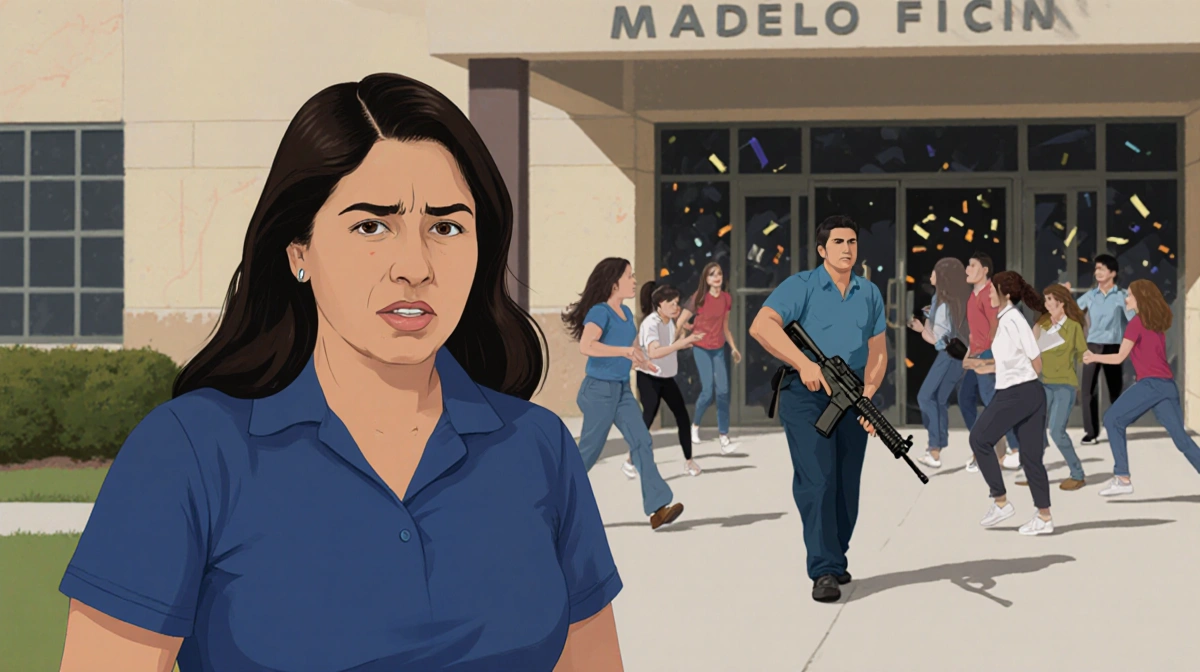
Fourth grade teacher Mercedes Salas described hearing the first shot and immediately locking her classroom door to protect her students.
“I didn’t want them to hear anything else so I just said you need to pray, you need to pray and I couldn’t say it out loud because I had a lot of kids,” Salas said, demonstrating her hands in prayer.
Salas testified one student grabbed scissors while she prepared to throw chairs if the gunman breached the door. She broke down describing hearing shots fired into nearby classrooms.
“I heard, I heard kids screaming. And when they screamed, I heard the gunshot. Then, I didn’t hear them anymore. So I knew something happened to them, because I couldn’t hear them anymore,” Salas said through tears.
Law Enforcement Expert Critiques Response Protocol
Former Dallas SWAT officer Michael Witzgall, who taught active shooter courses for 22 years, testified about proper protocol for responding to active shooters.
“When there’s an active shooter, we can not sit around and wait,” Witzgall told jurors.
He showed photographs of Gonzales attending his training classes and explained his teaching philosophy for active shooter situations.
“We got to stop the killing,” Witzgall testified. “You can’t wait for backup. I know there are curriculums out there that teach to always wait for two or three more guys, but in my opinion, and the way I train people, you don’t have to wait. You got to make a move.”
Defense attorneys countered that training scenarios differ significantly from real-world shooting situations, noting that officers entering alone face increased risks of being killed alongside potential victims.
Legal Implications and Broader Context
Gonzales and former Uvalde CISD Police Chief Pete Arredondo are the only two responding officers who have been charged in connection with the shooting response. Arredondo’s trial date has not been set.
Prosecutors allege Gonzales failed to follow established active shooter protocols by not immediately engaging the shooter when he arrived on scene. The charges of child abandonment or endangerment suggest his inaction put students and staff at greater risk.
The trial has drawn significant attention as it represents one of the first cases where law enforcement officers face criminal charges for their response during a mass shooting event. The outcome could influence how police departments nationwide train and prepare officers for active shooter scenarios.
Key Takeaways
- Teachers provided firsthand accounts of seeing Gonzales outside the school during the shooting
- Training protocol emphasizes immediate engagement rather than waiting for backup
- Only two officers face charges among the numerous law enforcement who responded
- The trial’s outcome may impact future mass shooting response standards
News Of Fort Worth‘s coverage of the trial continues as more witnesses are expected to testify about the events of that day and the response that followed.