
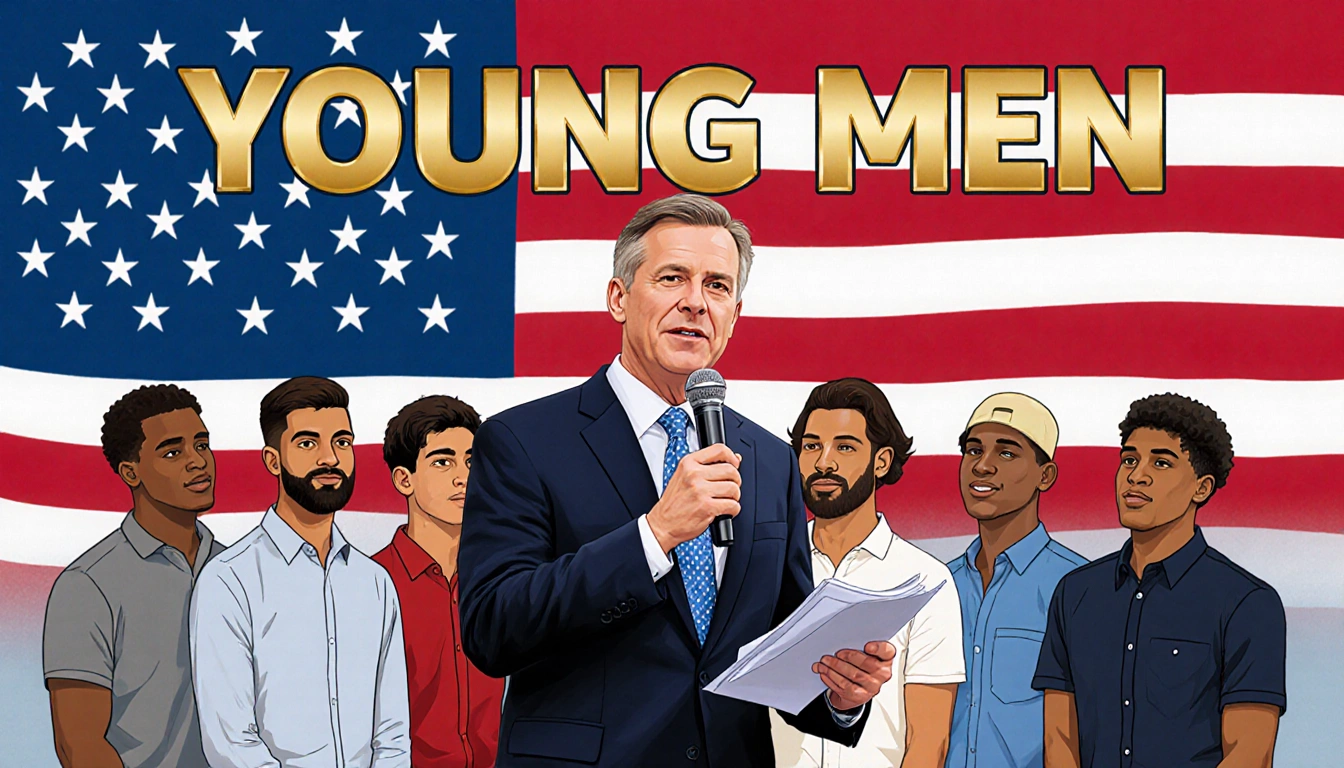
A Yale Youth Poll released this month shows that Trump’s approval among voters ages 18 to 22 dropped to 34% from 42% last year, while the 23-to-29 cohort fell to 32%. The drop signals a sharp reversal of the gains the former president made among young men in 2023.
Democratic Gains in 2024
In the 2024 election cycle, Democrats made notable progress with young men. Abigail Spanberger in Virginia, Mikie Sherrill in New Jersey, and New York City mayor Zohran Mamdani all improved the party’s performance in this demographic. NBC News exit polls indicate each candidate attracted between 7% and 9% of Trump voters in their contests.
Party Leaders Speak Out
After the November elections, Democratic National Committee Chair Ken Martin told reporters, “I never want to hear again that the Democratic Party has a problem with young men.” His statement underscored a belief that the party’s recent gains reflect a genuine shift.
A senior Republican strategist, speaking anonymously, noted, “There’s some bed-wetting going on amongst some folks who are like, ‘Well, Trump’s numbers have slipped with all these groups that he won big with last year,’ … The Republican ecosystem is just a little bit stronger in this space.” The strategist also warned that the Republican advantage may persist.
The Symposium on Young American Men
At a conference organized by The Lafayette Company, Senator Ruben Gallego, D-Ariz., addressed concerns that Democrats fear being “canceled” for focusing on men. He said, “It’s OK to reach out to men. Talk to men. Talk about men being men.” The symposium highlighted the urgency of addressing the “crisis” facing young men.
Republican Strategy for the Midterms
Republicans plan to portray Democrats as out of touch with young men while emphasizing economic gains for the group. They point to Trump’s “Big Beautiful Bill,” which includes provisions for tipped wages and other tax measures. The senior strategist added that the midterms will be decided by attitudes toward Trump and the economy, predicting sentiment will improve as Trump’s agenda fully sets in.
A senior GOP Senate aide said that “to the extent” Republicans are figuring how to get disaffected young men back to the polls, “they’re just hoping Trump does it” for them. The aide also noted that Republicans will capitalize on diversity policies that a future Democratic nominee may adopt.
Economic Factors Driving the Shift
Economic sentiment emerged as the biggest factor in the swing. Affordability was a central theme in the campaigns of Spanberger, Sherrill, and Mamdani. The candidates highlighted how rising costs limit young men’s ability to move out of parents’ homes and pursue independent living.
Youth unemployment for ages 16 to 24 was 10.8% in July, up from the previous year, according to the Bureau of Labor Statistics. In November, the unemployment rate for ages 20 to 24 fell to 8.3% from 9.2% in September, yet it remained the highest rate since 2021.
The Harvard Youth Poll found that roughly 4 in 10 people under 30 were “barely getting by” financially. Christian G., 25, an independent from Clifton, New Jersey, said, “I feel like I expected certain things to be improved or certain things to become more affordable, and it did the exact opposite … I would say for me it is kind of a testament to how, I guess, trust was lost over the year.” He added that he had voted for Sherrill after feeling let down by Trump.
Male-Centric Initiatives Across the State
Several state leaders announced programs aimed at men. Maryland Governor Wes Moore said he would hire more male teachers. California Governor Gavin Newsom signed executive orders to address male suicide and launched a “California Men’s Service Challenge.”
Virginia Democratic Senator Josh Thomas, who spoke at the symposium, said he authored legislation to create the state’s first governor’s advisory board on boys’ and men’s issues. He noted, “I’m laughing because it ain’t that hard if you’re being yourself … And I don’t know if it’s a good use of donor funds to try and re-create a new ecosystem or shoehorn people into an existing ecosystem.”
Zohran Mamdani’s Grassroots Approach
Mamdani, 34, who won young men by roughly 40 points over former Gov. Andrew Cuomo, leveraged podcasts to reach voters. He appeared on “Flagrant,” a comedy program Trump appeared on last year, and “The Adam Friedland Show.” In an interview, Mamdani said, “What I found time and time again is that affordability was not something that needed any translation in young people’s lives, that this was something that was the difference between whether or not they could move out of their parents’ apartment and live on their own or not.”
He added, “Part of this story that we are telling is that the crisis of cost has also denied so many people the engagement with their own city and the sense of themselves as being someone who does more than just exist between work and home.”
Mamdani’s campaign organized free events such as a soccer tournament and a scavenger hunt. He is considering more low-cost activities to keep young people engaged.
Voter Perspectives
Alex Lieberman of Brooklyn, New York, said he backed Mamdani in November but would vote for Trump again if Trump were on the ballot. He noted, “I think he has fulfilled his campaign promises … And I think that everything that people are not happy with, I just don’t, frankly, understand, because it was exactly what it was like in the first term.”
Senator James Lankford, R-Okla., told NBC News at the symposium that Trump has “sought to bolster the standing of young men, ‘but I haven’t heard him speak specifically … about young men much, other than celebrating excellence and achievement, celebrating hard work.'” Lankford said he no longer hears much discussion of “toxic masculinity” and that conservatives criticize diversity initiatives for harming younger white men.
The Road Ahead
A longtime pro-Trump operative said, “I don’t think we’ve lost them. I still think our party will be the one that has a more appealing vision. Will they turn out in the midterms for random Republicans? Maybe not. Were they turning out for the midterms before? No. Really, what we’re talking about is will they be there in ’28.”
The battle over young men’s support is shaping key races for the 2026 midterms and beyond. Democrats are capitalizing on economic messaging and grassroots outreach, while Republicans emphasize Trump’s leadership and economic proposals. How the two parties navigate these dynamics will determine whether the young male demographic remains a decisive factor in upcoming elections.
Key Takeaways
- Trump’s approval among 18-22-year-olds fell to 34% from 42% last year, signaling a reversal of gains.
- Democratic candidates Spanberger, Sherrill, and Mamdani attracted 7%-9% of former Trump voters, driven by affordability messaging.
- State initiatives in Maryland, California, and Virginia aim to address men’s issues through education, mental health, and advisory boards.
The next election cycle will test whether these strategies can secure a durable coalition of young men for either party.